
Choosing residential solar is a major investment, especially when equipment, prices, and regulations differ across countries. A sunny roof helps, but it does not guarantee strong savings. Roof direction, seasonal shade, local weather, and household electricity use matter just as much. Grid rules, import taxes, connection fees, and currency changes can also affect the final cost.
This guide presents ten practical buying tips for global buyers. It focuses on system sizing, panel quality, inverter performance, battery storage, warranties, and installer credentials. Certified professionals should assess the roof structure and confirm local electrical requirements. Ask for clear production estimates, not attractive promises. Request itemized quotes, including permits, labor, monitoring, maintenance, and future replacement costs. Small details matter.
Expect questions.
Who will inspect the roof? Does the warranty work in your country? Can the installer provide local references? These questions may feel repetitive, but they can prevent expensive surprises. A system that performs well in a dry region may need different protection in a coastal or tropical climate. Battery storage may also be unnecessary where grid power remains stable and affordable.
No checklist is flawless. Real projects sometimes expose hidden shading, delayed approvals, or weaker-than-expected output. That is why buyers should compare independent advice with installer proposals. Review technical documents carefully, and avoid decisions based only on the lowest price. A dependable residential solar purchase combines suitable equipment, qualified installation, transparent contracts, and realistic expectations. The goal is not simply to generate electricity. It is to build a safe, durable, and financially sensible energy system.

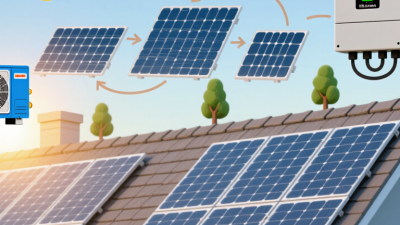
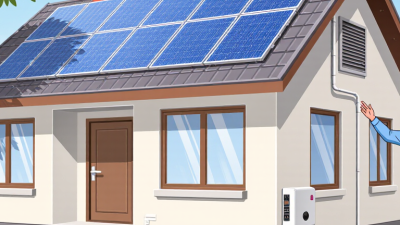
Residential solar is a complete energy system, not just rooftop panels. Solar modules produce direct current, while the inverter converts it into household alternating current. Racking secures each panel, and cables connect the array to protection equipment and the meter. A battery can store daytime production for evening use, but it adds cost, weight, and maintenance. The International Energy Agency reported about 420 gigawatts of solar PV additions worldwide in 2023. Growth is rapid, yet system quality still depends on local design.
Tip: Check your roof before comparing prices. Measure shade at 9 a.m., noon, and 3 p.m. Look for cracks, weak structures, and future tree growth. A neat roof is not always a suitable roof. NREL’s 2024 residential PV cost benchmark shows that hardware is only one part of total installed cost; labor, permitting, electrical work, and customer acquisition also matter.
Tip: Match every component to your home’s real conditions. Ask about inverter efficiency, operating temperature, surge protection, monitoring, and battery round-trip efficiency. The U.S. Energy Information Administration reports that residential electricity demand varies widely by climate and household behavior. Oversizing panels may increase unused production. Undersizing them can disappoint during cloudy weeks. I still recheck annual consumption, roof orientation, and utility rules before trusting a proposal. Performance estimates are models, not promises. A reliable installer should show assumptions, equipment ratings, warranties, and expected seasonal output in plain language.
Before comparing solar equipment, examine how your home uses electricity. Collect twelve months of utility bills, not just the latest statement. Look for seasonal changes. Air conditioning may dominate summer demand, while heating can reshape winter use. Record large loads, such as water heaters, pumps, ovens, and electric vehicles. A simple spreadsheet can reveal your daily and monthly consumption patterns. Smart meter data is useful, but it may contain gaps or estimated readings.
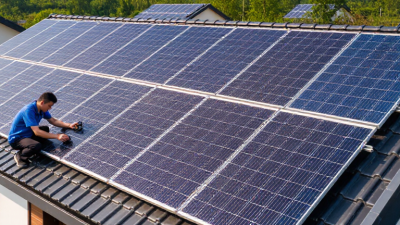
Your roof needs a practical inspection, not a quick glance from the driveway. Note its direction, pitch, age, and shaded areas during different hours. A nearby tree may cast little shade at noon but cover panels by late afternoon. Check roof plans, attic access, and local weather exposure with a qualified solar professional. They should assess structural capacity, wiring, fire access, and local permitting requirements. Do not assume a large roof guarantees strong solar production. A steep roof can complicate installation and maintenance.
Match expected solar output with your actual consumption profile. Oversizing may increase costs, while undersizing can leave expensive grid purchases. Battery storage also depends on outage needs, evening consumption, and permitted operating rules. My first estimate was too optimistic. I ignored winter cloud cover and inverter losses. Use a conservative production estimate, checked against regional solar data and a recent site assessment. Ask for assumptions in writing, including degradation, system losses, and expected annual output. Numbers deserve scrutiny.
Before selecting a residential solar system, compare your household’s annual electricity demand with the local solar resource. The figures below are representative planning benchmarks: solar irradiation is shown in kilowatt-hours per square metre per year, while household electricity use is shown in kilowatt-hours per year. Actual system sizing should use your utility bills, roof orientation, shading, local weather data, and applicable installation rules.
10 Residential Solar Buying Tips for Global Buyers
Comparing panels, inverters, batteries, and warranties requires more than checking price per watt. The IEA PVPS Trends 2024 report estimates that global photovoltaic capacity exceeded 1.6 terawatts by the end of 2023. That scale brings wider quality differences. Compare panel output at high temperatures, not only laboratory efficiency. NREL’s degradation research found an average annual panel decline near 0.5%, but installation quality can change real results. Ask for temperature coefficients, fire ratings, salt-mist testing, and verified production data.
Tips: Request three system simulations using your roof angle, local weather, and electricity tariff. A larger panel array may be wasteful without suitable inverter capacity. Inverters deserve careful comparison because they manage conversion, monitoring, and grid interaction. Check operating temperature, surge capacity, repair access, and replacement costs. For batteries, compare usable capacity, round-trip efficiency, cycle life, and safety certifications. The U.S. Department of Energy commonly reports lithium-based storage round-trip efficiency around 85–95%, though actual performance varies with temperature and charging speed.
Warranty language often hides the practical risk. Separate product warranty from performance warranty, labor coverage, shipping duties, and local service obligations. The IEA’s Batteries and Secure Energy Transitions report highlights rapidly growing battery demand, yet recycling and supply chains remain uneven across markets. That matters after year ten. A long warranty is not automatically useful if claims require overseas returns. I would also question optimistic savings calculators; mine once ignored seasonal shading. Verify assumptions with an independent installer, and keep every invoice, serial record, and commissioning report.
| Buying Tip | Solar Panels | Inverters | Batteries | Warranty Option to Check | What Buyers Should Verify |
|---|---|---|---|---|---|
| 1. Match the system to local sunlight and energy use | Residential modules commonly range from about 350 to 550 watts. Annual output depends on solar irradiation, orientation, tilt, temperature, shading, and system losses. | Select capacity according to the array size, household load profile, grid rules, and maximum allowable export. | Size storage for the intended backup period rather than simply matching the panel capacity. | Confirm that the performance guarantee states measurable energy-yield assumptions and exclusions. | Request a site-specific production estimate using local weather data and a documented loss factor. |
| 2. Compare efficiency and usable roof area | Modern crystalline-silicon residential panels often have module efficiencies of approximately 19% to 23%. | Typical weighted conversion efficiency is commonly around 96% to 99%, depending on operating conditions and design. | Round-trip efficiency is often approximately 85% to 95%; compare usable capacity, not only nominal capacity. | Check whether the stated efficiency and capacity are guaranteed under a defined test standard. | Compare annual energy yield per square metre and the total installed cost, not only the rated wattage. |
| 3. Examine degradation and long-term output | Many current modules specify first-year degradation of about 1% to 2%, followed by roughly 0.3% to 0.5% per year, but terms differ by product. | Efficiency can decline with age and high operating temperatures; ventilation and correct installation are important. | Battery capacity gradually decreases with calendar aging, temperature, charge rate, and cycling. | Review the guaranteed end-of-warranty capacity, cycle limit, throughput limit, and conditions that apply first. | Ask for the degradation formula, measurement method, and remedy if the guaranteed level is not achieved. |
| 4. Select equipment suitable for the local climate | Check operating temperature, humidity, salt-mist resistance, mechanical load ratings, hail rating, and suitability for snow or coastal environments. | Confirm the permitted ambient-temperature range, enclosure rating, ventilation requirements, and resistance to dust or moisture. | Lithium-iron-phosphate batteries are widely used for residential storage; temperature control and installation clearances remain essential. | Ensure the warranty remains valid in the planned climate and does not exclude high humidity, coastal air, heat, or freezing conditions without clear limits. | Compare relevant environmental ratings and require installation instructions for the exact site conditions. |
| 5. Check electrical compatibility and safety | Verify maximum system voltage, current, connector compatibility, grounding requirements, and fire classification. | Confirm grid voltage, frequency, phase configuration, anti-islanding protection, surge protection, and local certification. | Check battery voltage, communications protocol, protection system, thermal management, and permitted indoor or outdoor locations. | The warranty should clearly state installation, commissioning, maintenance, and safety requirements. | Use a qualified installer and verify compliance with the electrical and fire codes applicable in the destination country. |
| 6. Decide between string, hybrid, and module-level designs | Panels on the same string generally perform best when they have similar orientation and shading conditions. | String inverters can be cost-effective; hybrid inverters combine solar and storage; module-level electronics can reduce mismatch from partial shading. | A compatible hybrid system may provide solar charging, backup power, and energy management through one coordinated platform. | Check whether a single warranty covers the complete system or whether separate equipment warranties apply. | Compare expected energy yield, backup functionality, replacement cost, monitoring access, and service complexity. |
| 7. Compare backup capability, not just battery size | Solar panels normally shut down during a grid outage unless the system has approved islanding and backup equipment. | Check continuous output, short-duration surge power, transfer time, phase balance, and which circuits can operate during an outage. | Usable energy equals nominal capacity multiplied by the permitted depth of discharge; backup duration also depends on household load. | Confirm whether backup operation, emergency reserve settings, and replacement parts are covered. | Request a load schedule showing which appliances can run simultaneously and for how long. |
| 8. Evaluate warranty length and practical coverage | Product warranties are commonly around 10 to 15 years, while performance warranties often extend to 25 or 30 years. | Standard warranties are often about 5 to 12 years, with possible paid extensions depending on the product and market. | Residential battery warranties commonly range from about 10 years to a specified cycle or energy-throughput limit. | Read labor, shipping, removal, replacement, water ingress, installation-error, and transfer-of-ownership clauses. | Prefer written terms that identify the responsible warranty provider and the claim process in the buyer's country. |
| 9. Calculate total cost of ownership | Include mounting hardware, transport, taxes, installation, cleaning access, monitoring, and possible roof reinforcement. | Include replacement or extension costs, software subscriptions if any, surge protection, and electrical upgrades. | Include usable kWh, expected cycles, efficiency losses, thermal management, and eventual replacement or recycling costs. | A longer warranty is valuable only when exclusions, claim expenses, and local service arrangements are acceptable. | Compare cost per estimated usable kilowatt-hour and expected annual savings under conservative assumptions. |
| 10. Confirm service, monitoring, and end-of-life support | Choose equipment with accessible documentation, serial-number records, and replacement compatibility over the expected system life. | Remote monitoring can reveal faults, production losses, and firmware issues; verify who owns the monitoring account. | Battery recycling, transport restrictions, firmware support, and safe decommissioning are important for international buyers. | Check local response times, authorized service availability, software support duration, and warranty transfer rules. | Obtain a written service plan covering maintenance, fault response, replacement logistics, recycling, and system handover. |
Note: Performance ranges and warranty periods are typical residential-market values, not universal guarantees. Always confirm the current technical datasheet, local regulations, installation conditions, and complete warranty document before purchase.
Solar costs begin with more than panel prices. Ask for a complete quotation covering design, permits, wiring, mounting, monitoring, maintenance, and battery work. Compare energy output, not only system size. A shaded roof can reduce production sharply after noon. Request a month-by-month estimate using local sunlight data and your electricity bills. Real installations rarely match the first spreadsheet.
Incentives differ by country, region, and property type. Confirm eligibility through government offices or the local utility before signing. Tax credits, rebates, feed-in payments, and net-metering rules may change. Check application deadlines and whether batteries qualify separately. Also ask about export limits, fixed grid charges, and future tariff changes. Cheap today may not stay cheap.
Installation standards deserve equal attention. Use a properly licensed electrical contractor and request proof of insurance, training, and relevant permits. Confirm roof loading, waterproofing, fire access paths, cable protection, grounding, and disconnect locations. Battery systems may require extra ventilation or clearance. The installer should explain local inspection and grid-connection steps clearly. Get warranties in writing, including labor coverage and response times. I would still question every optimistic savings claim; weather, roof repairs, and policy changes can alter the result.
Choosing a qualified solar provider requires more than comparing installation prices. Ask for licenses, insurance, training records, and recent customer references. A reliable provider should inspect your roof, electrical panel, shading, and local grid requirements. They should explain these findings in plain language. A quick online quote is not enough. Experience matters.
Before signing, review the production estimate and its assumptions. Ask how storms, seasonal sunlight, roof age, and future electricity use may affect performance. Confirm who handles permits, grid connection, inspections, and system registration. Read equipment warranties carefully, including labor coverage and response times. Do not assume every warranty offers the same protection. The cheapest bid can become expensive later. I have seen homeowners overlook removal costs during roof replacement.
Long-term care needs a written plan. Set a simple monitoring routine and check monthly production against the estimate. Keep invoices, drawings, serial numbers, inspection reports, and maintenance dates in one folder. Panels often need little cleaning, but dust, pollen, leaves, and bird activity can reduce output. Have a qualified technician inspect connections after severe weather. Battery systems require extra attention, ventilation checks, and clear replacement planning. Inverters may need replacement before the panels. Leave safe access around all equipment. One overlooked detail: designs change. Revisit your assumptions when your household adds appliances, storage, or an electric vehicle.