
Blogs

2026 Top Solar Panels for Home Use Which to Buy?

The 2026 solar market looks stronger, but choosing the right system still requires careful judgment. Solar panels for home use now differ widely in efficiency, warranty coverage, temperature performance, and real-world reliability. A higher laboratory rating does not automatically produce more electricity on your roof.

The International Energy Agency Photovoltaic Power Systems Programme reported that global photovoltaic capacity exceeded 1.6 terawatts by the end of 2023. It also recorded approximately 456 gigawatts of new solar installations during that year. The IEA’s Renewables 2024 report expects solar PV to remain the leading source of renewable capacity growth through 2030. These figures show strong industry momentum. They do not eliminate household buying risks.

Roof conditions matter.

A shaded roof may reduce output more than a small efficiency difference. Hot climates also expose weaknesses in temperature coefficients and ventilation. The U.S. Department of Energy recommends comparing system performance, warranties, installation quality, and local incentives together. NREL’s PVWatts tool further shows why production estimates should reflect roof direction, tilt, weather, and shading.

This guide evaluates leading 2026 panels using manufacturer specifications, independent testing, warranty terms, and practical ownership considerations. It examines efficiency, degradation rates, durability, inverter compatibility, and expected value. Some rankings remain debatable. Manufacturer data can appear optimistic, while installer workmanship is often overlooked. Therefore, the best panel may not be the most powerful model. It should fit your roof, climate, budget, and long-term energy goals.

2026 Top Solar Panels for Home Use Which to Buy?

What Makes a Solar Panel Suitable for Home Use in 2026?

A suitable home solar panel must fit your roof, climate, electricity use, and budget. Higher efficiency helps when roof space is limited. Yet efficiency alone does not decide value. A panel facing summer heat needs a strong temperature coefficient. It should also carry IEC 61215 and IEC 61730 safety certifications. The IEA’s Renewables 2024 report expects solar power to deliver about 80% of global renewable capacity growth through 2030. That growth increases choice, but it also makes comparison harder.

Look for tested durability, clear degradation terms, and dependable installation support. NREL research commonly uses about 0.5% annual degradation when estimating long-term photovoltaic output. This is not a promise for every roof. Shade, dust, snow, and poor ventilation can reduce production faster. A practical home system should match the inverter, battery plan, roof structure, and local grid rules. A 22% efficient panel may outperform a 23% model if it handles heat better. Real homes are rarely perfect laboratories.

Tips: Measure usable roof space before comparing wattage. Request a shade analysis with hourly production estimates. Check the temperature coefficient and product warranty carefully. Ask who handles replacement labor. I would avoid choosing from efficiency numbers alone. That shortcut is tempting, but incomplete. Also compare annual energy yield, not just the panel’s peak rating. Pay attention to roof age. Replacing panels later can be expensive.

How Residential Solar Panels Work and Compare

Residential solar panels turn sunlight into direct current through semiconductor cells. An inverter converts that current into household alternating current. Your meter records surplus electricity sent to the grid, where local rules determine compensation. A battery can store daytime production for evening loads, but it adds cost, weight, and maintenance. During a rooftop assessment, I check roof direction, pitch, shade, cable paths, and the main electrical panel. Small details matter. A chimney shadow can reduce output across several connected panels.

When comparing 2026 options, look beyond the headline efficiency percentage. Compare wattage, temperature coefficient, expected degradation, product warranty, and performance warranty. Higher efficiency helps on small roofs, while a lower-cost panel may suit a large, unshaded roof. Panels rarely produce their rated power at noon. Heat, dust, clouds, and orientation change real results. I once focused too heavily on peak wattage. That was incomplete. Annual energy estimates are more useful than a single laboratory number.

The inverter deserves equal attention because it manages conversion, monitoring, and sometimes battery integration. Microinverters can reduce partial-shade losses, while a central inverter may simplify a larger system. Ask for installation records, safety documentation, and clear maintenance terms. A strong comparison also includes roof age, local inspection requirements, financing costs, and electricity rates. Do not assume the biggest system is best. A carefully sized array can match daytime demand without covering an unsuitable roof.

Key Factors for Choosing the Right Home Solar Panel

Choosing a home solar panel in 2026 starts with your roof, not a shopping list. A south-facing roof with limited shade usually performs best, but roof direction is only one variable. Measure morning and afternoon shadows, especially near chimneys and neighboring buildings. The IEA PVPS Trends 2024 report recorded more than 440 GW of new solar capacity worldwide in 2023, showing rapid growth but not uniform quality.

Efficiency matters when roof space is tight. The Fraunhofer ISE Photovoltaics Report 2024 placed many commercial modules around 20% to 23% efficiency. However, a higher wattage label is not always better. Check temperature performance, low-light output, mechanical-load ratings, and expected annual degradation. The U.S. Department of Energy notes that heat can reduce photovoltaic output, so a panel’s temperature coefficient deserves attention in hot climates. Small differences become visible on a summer afternoon.

Do not ignore the inverter, wiring, monitoring system, or installer workmanship. NREL research on photovoltaic degradation commonly uses roughly 0.5% annual degradation as a planning assumption, although actual results vary. Ask for independent test certificates, clear product and performance warranties, and local installation references. A twenty-five-year promise sounds reassuring. Yet warranty terms may exclude labor, transport, or unusual weather damage. I would also compare estimated yearly kilowatt-hours, not only panel price. My imperfect rule is simple: choose the system that fits the roof, household load, and maintenance reality. Fancy specifications can distract.

2026 Top Solar Panels for Home Use Which to Buy? - Key Factors for Choosing the Right Home Solar Panel

Panel Category Typical Rated Power Typical Efficiency Cell Technology Temperature Coefficient Typical Product Warranty Typical Annual Degradation Approx. Panel Size Best Home Use Key Buying Consideration
Standard Monocrystalline 350–450 W 19%–22% Monocrystalline silicon, half-cut cells Approximately −0.34% to −0.40% per °C 12–15 years Approximately 0.40%–0.50% per year About 1.7–2.0 m² General residential roofs with sufficient space Good balance of cost, performance, availability, and installation simplicity
High-Efficiency Monocrystalline 430–550 W 21%–24% Advanced monocrystalline cells, often using back-contact or n-type designs Approximately −0.29% to −0.35% per °C 15–25 years Approximately 0.25%–0.40% per year About 1.8–2.1 m² Small roofs, high electricity consumption, and premium installations Higher energy yield per square metre, but the initial purchase price may be higher
Bifacial Monocrystalline 400–600 W 20%–23% Monocrystalline cells with an energy-producing rear side Approximately −0.29% to −0.36% per °C 15–25 years Approximately 0.25%–0.40% per year About 1.9–2.2 m² Ground mounts, carports, elevated racks, and reflective surfaces Rear-side gain depends on mounting height, ground reflectivity, and system design
N-Type Monocrystalline 400–600 W 21%–24% N-type silicon, commonly TOPCon or back-contact architecture Approximately −0.28% to −0.34% per °C 15–25 years Approximately 0.25%–0.35% per year About 1.8–2.1 m² Long-term residential systems and hot-climate locations Lower degradation and improved temperature performance can increase lifetime energy output
P-Type Monocrystalline 350–450 W 19%–22% P-type silicon, often using PERC cell architecture Approximately −0.34% to −0.40% per °C 12–15 years Approximately 0.40%–0.50% per year About 1.7–2.0 m² Budget-conscious installations and standard roof layouts Usually offers competitive upfront pricing with mature installation practices
Thin-Film Solar Panel 100–450 W per panel 10%–18% Thin-film semiconductor layers deposited on glass or other substrates Approximately −0.20% to −0.35% per °C 10–25 years Approximately 0.30%–0.70% per year Varies by product and installation format Large roofs, lightweight structures, or surfaces where low weight is important Requires more installation area to produce the same capacity as crystalline silicon
Flexible Solar Panel 100–300 W per panel 12%–19% Lightweight crystalline or thin-film construction on a flexible substrate Approximately −0.25% to −0.45% per °C 5–15 years Approximately 0.40%–0.80% per year Varies by shape and mounting method Low-load roofs, curved surfaces, mobile applications, and temporary installations Check surface temperature, ventilation, attachment method, and expected service life
Small Residential Panel 250–400 W 18%–22% Monocrystalline silicon Approximately −0.34% to −0.40% per °C 12–20 years Approximately 0.35%–0.50% per year About 1.5–1.8 m² Roofs with limited mounting dimensions or complex layouts Easier to arrange around skylights, vents, dormers, and other roof obstacles
Large-Format Residential Panel 450–600 W 20%–24% Large-format monocrystalline cells, often n-type Approximately −0.28% to −0.36% per °C 15–25 years Approximately 0.25%–0.40% per year About 2.0–2.4 m² Open roofs with simple dimensions and fewer obstructions Fewer panels may reduce mounting hardware and labour, but roof access and handling must be assessed

Figures are typical market ranges for residential solar products and can vary according to panel design, climate, installation conditions, certification requirements, and manufacturer specifications. Actual system output also depends on roof orientation, tilt, shading, inverter performance, local weather, and maintenance.

Top Solar Panel Types and Their Best Applications

Choosing a home solar panel in 2026 starts with the roof, not the sales brochure. Monocrystalline silicon remains the practical default. The IEA PVPS Trends 2024 report states that crystalline silicon represented about 98% of global module production in 2023. Fraunhofer ISE’s Photovoltaics Report 2024 places commercial module efficiency near 19–23%. These panels suit limited roof space and sunny, weight-sensitive homes.

TOPCon and heterojunction designs can improve output, especially in hot climates or partly shaded areas. Their lower temperature losses matter on dark roofs that feel hot at noon. Bifacial modules work best above bright surfaces, such as white membranes, gravel, or elevated patios. They often disappoint on ordinary asphalt shingles. Thin-film panels are lighter and more tolerant of weak light, but they need more area. They fit large roofs, façades, and unusual structures better than compact urban rooftops.

Tips: Measure usable roof area after vents, skylights, and fire-access zones. Request temperature coefficients, product warranties, and measured performance data. Do not choose efficiency alone. A slightly less efficient panel may produce more value when shading, orientation, and installation cost are included. I would also question optimistic yield estimates. NREL’s PVWatts guidance shows that tilt, azimuth, weather, and system losses can materially change annual production. Real roofs are imperfect. Your design should admit that.

Installation, Costs, Maintenance, and Long-Term Value

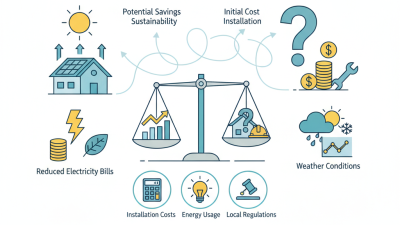
Choosing the best solar panels for home use in 2026 requires more than comparing efficiency percentages. A professional installer should inspect roof age, shading, orientation, and structural capacity. The U.S. Department of Energy’s NREL reported a residential solar benchmark of about $3.15 per watt in early 2024, before local incentives and financing. Labor, electrical upgrades, permits, and roof repairs can change that figure sharply. Get at least three written proposals.

Installation quality matters greatly. Panels are only one part of the system. Inverters, mounting hardware, monitoring equipment, and battery storage influence reliability and payback. The U.S. Energy Information Administration reported average U.S. residential electricity prices near 16 cents per kilowatt-hour in 2024. Higher utility rates can improve solar savings, but export rules may reduce them. Check local billing policies carefully.

Maintenance is usually light, but not zero. Remove heavy debris, watch for shading growth, and review performance alerts monthly. NREL research commonly uses about 0.5% annual panel degradation, though real roofs vary. A 25-year warranty sounds reassuring, yet workmanship coverage deserves equal attention. I would not choose the highest-efficiency panel automatically. A slightly less efficient system may deliver better long-term value when installation costs, roof space, repair access, and financing are considered. My own caution is simple: projected savings are estimates, not promises. Weather, electricity prices, and household usage can all disappoint.