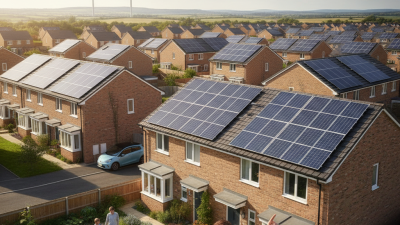

Choosing among the 10 best solar energy suppliers in the UK starts with a practical question: what does your home need? A south-facing roof, a shaded terrace, and a household that uses power after sunset can require different equipment and advice. The right supplier should explain those differences clearly, not just promise impressive savings.
International Energy Agency executive director Fatih Birol described solar’s growing role this way: “Solar is the new king of electricity markets around the world.” For UK households, that momentum makes supplier comparisons especially relevant. Yet a strong sales pitch is not proof of a strong installation. Ask who will design and fit the system, what the warranty covers, and how aftercare works if an inverter light turns red on a wet winter morning.
Details matter. Compare panel and battery options, estimated annual generation, payment terms, and realistic payback assumptions. Check whether projections account for roof orientation and shading. A trustworthy quote should show its working and explain what could change the estimate. Not every home will benefit equally, and even careful forecasts can miss the mark.
This guide introduces ten suppliers serving the UK market and the factors worth weighing before you request a quote. It is a starting point, not a substitute for checking current terms and getting tailored advice. Look beyond the headline price. Then compare the details.

By 2024, the UK’s solar photovoltaic capacity had passed 18 gigawatts, reflecting years of rooftop installations and larger ground-mounted projects. The figure describes potential output under suitable conditions, not electricity flowing continuously at that rate. A bright afternoon can lift generation sharply; a grey winter morning cannot. That distinction matters.
Solar panels now appear on homes, warehouses, public buildings and fields, with deployment varying across regions. South-facing roofs often offer strong exposure, but shading from chimneys or nearby trees can reduce performance. Small details count. So do system age, orientation and maintenance. The national capacity figure is useful, though estimates may differ according to the reporting date and what installations are included.
More capacity does not automatically mean lower bills or a fully reliable supply. Solar output changes with daylight and weather, so storage, flexible demand and grid connections shape how much power can be used when produced. It is tempting to treat the 18 GW milestone as proof that the transition is complete. It is not. The number shows substantial progress, while also leaving practical questions about local networks, seasonal output and future installation quality.
The UK’s cumulative solar photovoltaic (PV) capacity grew from approximately 13.3 GW in 2019 to 17.6 GW in 2024. The 2024 figure is an approximate rounded estimate; published totals can vary with reporting and revisions.
Source: UK Department for Energy Security and Net Zero, Solar photovoltaics deployment statistics.
A solar quote is only useful when its assumptions are clear. Check that the installer’s MCS certification is current and covers the work being offered. Ask for the certificate details, not just a logo on a website. Then compare warranties separately: panels, inverter, battery, and installation workmanship may have different terms. Read the exclusions. Some warranties cover parts but not the labour needed to replace them.
Tips: Use 3.5 kWp as a comparison point, not a promise of the right system for your home. Ask each supplier to price a similar system and state its estimated annual generation. Check the roof direction, shading, and assumptions behind that estimate. Small details matter.
A 3.5 kWp system can help compare proposals, but actual performance varies with roof conditions and household use. Ask what happens if generation falls below the estimate, and whether monitoring or call-outs are included. I would be cautious of unusually confident forecasts; a shaded roof can change the picture. Keep the written quote, warranty documents, and certificate details together. It is easy to overlook the small print when the headline price looks attractive.
Use this scorecard to compare written quotes from UK solar installers. It sets out evidence-based checks and indicative benchmarks; it does not rank or endorse specific suppliers.
| # | Assessment dimension | Benchmark or evidence to request | What to check before accepting | Suggested weight |
|---|---|---|---|---|
| 1 | Installer certification | Check the installer’s current MCS certification and the relevant solar PV installation scope in the official MCS directory. | Confirm that the certified business named on the quote will carry out or take responsibility for the installation. For Smart Export Guarantee eligibility, check the current Ofgem criteria, including accepted installation standards. | 15% |
| 2 | Consumer protection | Ask which consumer code or dispute-resolution scheme applies to the contract and verify membership with the scheme. | Read the cancellation, complaint, deposit and workmanship-dispute terms. Membership claims should be independently verifiable. | 10% |
| 3 | System size and design | A 3.5 kWp system is a useful comparison size, not a standard fit for every home. Ask for panel count, panel wattage, roof layout and total DC capacity. | Check roof dimensions, shading, orientation, structural considerations and any proposed optimisers. The design should match the property rather than a generic package. | 10% |
| 4 | Annual generation estimate | For an indicative comparison, 3.5 kWp multiplied by an assumed UK specific yield of 850–950 kWh per kWp gives roughly 2,975–3,325 kWh per year. | Require a property-specific estimate that states its location, roof orientation, pitch, shading assumptions and calculation method. Actual output can fall outside this range. | 15% |
| 5 | Performance forecast | The quote should distinguish estimated generation from estimated bill savings and show the assumptions used for self-consumption, import prices and export payments. | Do not treat projected savings or payback as guaranteed. Ask for the effect of lower generation, lower self-consumption and changing tariff rates. | 10% |
| 6 | Panel product warranty | Obtain the manufacturer’s written product warranty and performance warranty for the exact panel model. Terms and durations vary by product. | Check who handles claims, what is covered, whether labour and removal costs are included, and how performance degradation is measured. | 8% |
| 7 | Inverter and battery warranties | Request separate warranty documents for the inverter and, if included, the battery. Coverage can differ by model and operating conditions. | Check warranty duration, throughput or cycle limits, installation conditions, replacement process and whether labour is covered. | 8% |
| 8 | Workmanship and roof protection | Get the installation workmanship warranty in writing, including its duration, scope and claims contact. | Clarify responsibility for roof leaks, wiring, mounting equipment and making good any installation damage. Manufacturer product warranties are not a substitute for workmanship cover. | 8% |
| 9 | Electrical and handover documents | Confirm that the quote includes commissioning, the relevant electrical certification and a complete system handover pack. | Request the system design, equipment details, operating instructions, warranty documents and confirmation of any required grid or building-control notifications. | 8% |
| 10 | Itemised price and contract | Compare like-for-like written quotes showing equipment, installation, scaffolding, electrical work, optional battery costs and applicable taxes. | Check payment stages, exclusions, estimated installation date, after-sales contact and what happens if the site survey changes the design or price. | 8% |
How to use the weights: Score each dimension consistently across quotes, then apply the suggested weights for a comparison. The 3.5 kWp generation range is an indicative calculation, not a guaranteed output; location, roof direction, pitch, shading, system design and weather all affect generation.
Comparing ten UK solar suppliers is more useful when the equipment is considered as a complete system, not a panel shortlist. Check panel efficiency, product warranty, and expected output in low light. Roof direction and shading can matter more than a small difference in headline efficiency. Ask whether the quoted generation estimate reflects your roof, rather than a standard model. Details matter.
Inverters deserve equal attention. String inverters may suit simpler roofs, while microinverters can help where panels receive uneven shade. Hybrid models may make adding a battery easier, but compatibility should be confirmed in writing. Compare battery capacity in usable kilowatt-hours, not just the larger advertised figure. Also check the warranty, expected cycle life, and whether the system can provide backup power during an outage.
Not always. A battery does not automatically keep a home running when the grid fails.
Supplier quotes can be awkward to compare if they use different assumptions, and I would question any estimate that hides them. Look for a clear equipment schedule, installation scope, and aftercare terms before choosing.
10 Best Solar Energy Suppliers in the UK?
Comparing system costs, payback periods and SEG export payments
When comparing solar suppliers, check what each quote includes: panels, inverter, scaffolding, installation and any monitoring equipment. A lower headline price may exclude roof repairs or electrical upgrades. For a fair comparison, ask for the same system size and battery setup in every quote. Small details matter. Roof direction, shade from a chimney, and household electricity use can change the expected savings substantially.
Payback estimates are useful, but they are not guarantees. They depend on installation cost, self-consumption, future electricity prices and system performance. A battery may let you use more of your own solar power, but its extra cost can lengthen payback. Ask suppliers to show their assumptions, including annual generation and maintenance needs. SEG payments compensate households for eligible electricity exported to the grid; rates and terms vary between tariffs and may change. Export income is usually only one part of the financial picture.
Tips: Compare written quotes line by line. Check the export rate, contract length and payment conditions. Ask how shade was assessed, and whether projected savings assume you use electricity during daylight. If an estimate seems unusually certain, question it.
A dependable solar installation is measured by more than the panels on the roof.
MCS installation data recorded over 180,000 certified solar PV installations in 2023, making clear why consistent commissioning and aftercare matter.
Grid notification is a key check: systems within the G98 limit, generally up to 16 A per phase, must be notified to the local Distribution Network Operator after installation, usually within 28 days. Larger systems generally require G99 approval before connection. Ask the installer to confirm the route in writing and provide evidence of notification or approval. Details matter.
At handover, expect a commissioning record, system diagram, shutdown instructions, monitoring access, and contact details for faults. A real-world check is simple: can you find the inverter isolator and understand what its warning lights mean?
Guarantees should separate product cover from workmanship and roof-weatherproofing cover; ask what is excluded and who handles a claim if the installer closes. MCS consumer guidance supports clear documentation and consumer protections, but paperwork alone cannot guarantee a quick repair. That is worth remembering.
Even careful buyers may overlook the small print. A strong supplier explains it without pressure, gives you copies before sign-off, and makes the first service contact easy to reach.