2026 Best Solar Panels How Much Does It Cost to Install Solar?
Choosing the best solar panels in 2026 requires more than comparing efficiency percentages. Homeowners must examine system size, roof condition, local sunlight, battery needs, labor, permits, and available incentives. The cost to install solar can change sharply between neighborhoods, even when two homes have similar roofs.
The National Renewable Energy Laboratory reports that installed residential prices depend heavily on equipment, installation complexity, and market conditions. Berkeley Lab’s Tracking the Sun report also shows meaningful regional price differences. Its recent data places typical U.S. residential system prices near the low-$3-per-watt range before incentives, although quotes can move higher. A 6-kilowatt system could therefore represent a substantial investment. It may also produce meaningful long-term savings.
The International Energy Agency expects solar photovoltaic power to drive most new renewable capacity through 2030. Fatih Birol, the IEA’s Executive Director, has described solar as “the cheapest source of electricity in history.” That statement is powerful, but it does not make every installation affordable. Financing charges, shading, roof repairs, and weak local incentives still matter. A low quote can hide compromises. A premium panel can also deliver poor value on a shaded roof. This guide compares panel performance, warranties, installation prices, and practical ownership costs. It focuses on evidence, not showroom promises. Real projects are messier. Your final number may differ. That is normal, and it deserves careful review before you install solar.
Solar Panel Basics and How to Compare Their Efficiency
Solar panels convert sunlight into electricity through photovoltaic cells. Their efficiency shows how much sunlight becomes usable power under standard test conditions. A panel rated at 22% converts more sunlight than one rated at 19%, assuming similar conditions. However, laboratory results are not your roof’s daily reality.
Compare more than the headline percentage. Check the temperature coefficient, because panels produce less power on very hot afternoons. Review expected degradation, physical dimensions, low-light performance, and tested output. A compact, efficient panel may suit a small roof, while a larger panel could cost less per watt. Shading, roof direction, tilt, wiring, and the inverter also affect final production. Installation prices vary with labor, permits, roof repairs, and optional battery storage.
Tips: Ask for the panel’s independent test sheet and a clear annual production estimate. Compare at least three detailed quotes, not just advertised prices. I would avoid choosing efficiency alone. I once underestimated afternoon shade from a nearby tree; the panel rating looked excellent, but the projected output needed revision. That mistake is worth remembering. Ask how installers calculate shade losses, seasonal production, maintenance access, and future replacement costs. A reliable comparison uses the same roof conditions, electricity usage, and financing assumptions for every proposal. Small details matter.
2026 Best Solar Panels: How Much Does It Cost to Install Solar? - Solar Panel Basics and How to Compare Their Efficiency
| Panel Category |
Typical Efficiency |
Typical Panel Output |
Temperature Coefficient |
Approx. Roof Area per kW |
Installed Cost per Watt |
Estimated 6 kW System Cost |
Typical Annual Output per kW |
Best Fit |
| Standard Monocrystalline |
19%–22% |
350–450 W |
−0.30% to −0.40%/°C |
48–58 sq. ft. |
$2.20–$3.20 |
$13,200–$19,200 |
1,200–1,700 kWh |
Most residential roofs; a balance of cost, efficiency, and availability. |
| High-Efficiency Monocrystalline |
21%–23% |
400–470 W |
−0.25% to −0.35%/°C |
43–52 sq. ft. |
$2.70–$3.80 |
$16,200–$22,800 |
1,200–1,700 kWh |
Small roofs, limited roof space, or projects where maximum power density matters. |
| Bifacial Monocrystalline |
20%–23% |
400–500 W |
−0.29% to −0.35%/°C |
43–55 sq. ft. |
$2.80–$4.00 |
$16,800–$24,000 |
1,260–1,950 kWh |
Ground mounts or elevated systems with reflective surfaces and good rear-side light. |
| Thin-Film |
10%–15% |
100–200 W |
−0.20% to −0.30%/°C |
70–100 sq. ft. |
$2.50–$4.00 |
$15,000–$24,000 |
1,100–1,650 kWh |
Large roofs, lightweight structures, or applications that need better performance in high temperatures. |
Comparison notes: Costs are typical U.S. residential pre-incentive estimates and include equipment, labor, permitting, and installation. Actual prices vary by location, roof condition, system size, electrical upgrades, and financing. Annual production depends on sunlight, roof orientation, tilt, shading, weather, and system losses. Bifacial output assumes suitable rear-side light; the listed uplift is not guaranteed for standard rooftops. Panel efficiency measures the percentage of sunlight converted into electricity under standardized test conditions.
Key Factors That Determine Solar Installation Costs
Solar installation costs in 2026 depend on more than panel prices. System size is a major factor. A six-kilowatt system may suit a moderate household, while electric heating requires more capacity. Your installer should review twelve months of electricity bills before suggesting a design.
Roof condition matters too. An aging roof may need repairs before installation. Complex roof angles, heavy shading, and long cable runs can increase labor costs. A ground-mounted system may require trenching, structural work, and additional permits. Local labor rates also vary sharply between cities and rural areas.
Battery storage can raise the project price substantially. It may be useful where outages are common or evening electricity rates are high. However, many households may not recover that cost quickly. Ask for separate prices for panels, installation, permits, monitoring, and battery equipment. Request a written production estimate based on shade measurements, not optimistic assumptions.
A qualified electrician should verify the main service panel and connection requirements. Local incentives can reduce costs, but eligibility rules and deadlines change. Do not treat an online calculator as a final quote. Real projects often reveal missing costs, and even professional estimates remain imperfect. Reviewing the assumptions carefully can prevent an attractive price from becoming an expensive surprise.
Step-by-Step Guide to Planning a Home Solar System
Planning a home solar system starts with your electricity bills, not a sales brochure. Collect twelve months of usage and mark high-demand seasons. Then inspect the roof from the ground. Look for shade, cracked tiles, aging materials, and safe access. A qualified installer can identify problems that photographs miss. Do not skip this. Solar may require roof repairs before installation.
Next, size the system around your actual consumption. Request a production estimate using roof direction, local sunlight, and seasonal weather. A six-kilowatt system might suit one household, but not another. Compare proposals line by line. Check panel capacity, inverter rating, mounting work, monitoring, permits, labor, and warranties. Installation costs vary widely by location and electrical upgrades. Request at least three written quotes, with taxes and grid fees listed separately. A cheap quote may exclude important work.
Before signing, confirm local permits and grid-connection rules with the utility or public authority. Ask how excess electricity is credited and whether battery storage is optional. Review payment terms carefully; a low monthly figure can hide a longer contract. Plan installation around meter access and clear driveway space. After commissioning, keep the final drawings, inspection record, and equipment serial numbers. Field planning often reveals one uncomfortable truth: estimated savings are not guaranteed. Cloudy months, changing tariffs, and future appliance use can alter the result.
Installation Process, Equipment Choices, and Expected Timelines
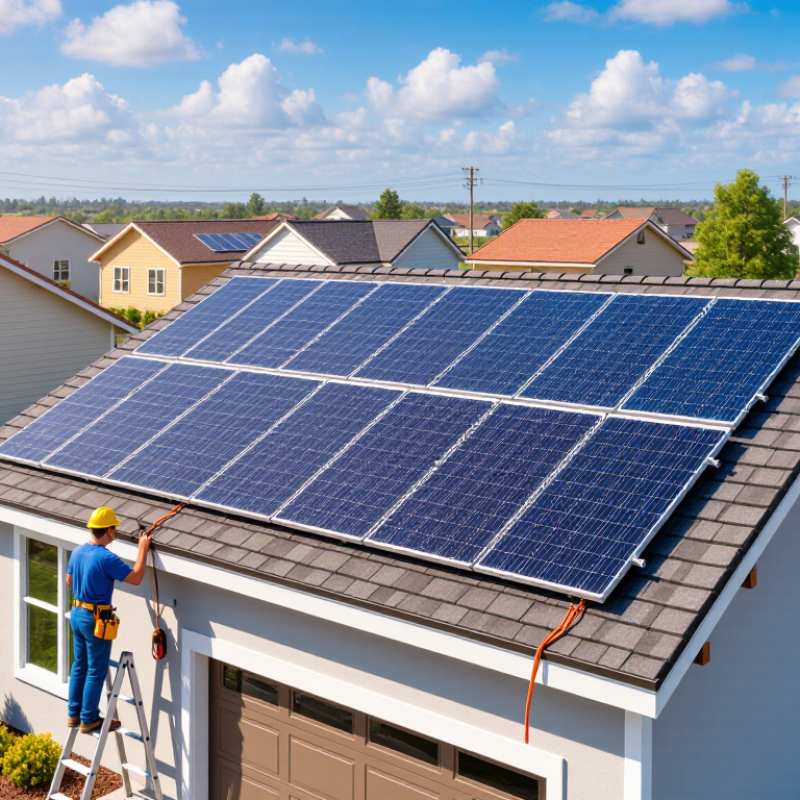
Installing solar starts with a site assessment, not a sales promise. A technician checks roof age, shading, electrical capacity, and annual electricity use. The Lawrence Berkeley National Laboratory reported a median residential price near $3.2 per watt in its 2024 Tracking the Sun report. That figure varies with roof complexity, local labor, and equipment choices.
Panel selection involves more than efficiency ratings. High-efficiency modules help when roof space is limited. Microinverters can simplify shaded designs, while string inverters often reduce equipment costs. Batteries add backup capability, but they require careful sizing and ventilation planning. The National Renewable Energy Laboratory’s residential benchmarks show that storage can substantially increase total system costs. Bigger is not always better.
Expect several stages. Design may take one to two weeks. Permitting and utility approval can take two to eight weeks. Installation commonly takes one to three days after approval. Inspection and grid connection may require another two to six weeks. Local rules can change everything. A neat schedule is attractive, but often wrong. Weather, paperwork errors, or an aging electrical panel can extend the project. I would request a written timeline, equipment specifications, warranty terms, and a line-item price before signing. Then compare the proposal with independent production estimates, such as those generated through the National Renewable Energy Laboratory’s PVWatts tool.
2026 Best Solar Panels: How Much Does It Cost to Install Solar?
Typical U.S. residential solar installation costs before tax credits and other incentives
Estimated installed cost: The chart uses a representative gross price of approximately $3.00 per watt, within the commonly reported residential range of about $2.50–$3.50 per watt. Final pricing depends on roof design, local labor, permitting, electrical upgrades, battery storage, and system accessibility.
Typical installation process: Site assessment and system design usually take 1–2 weeks. Permitting and utility approval often take 2–8 weeks, depending on local requirements. Physical installation commonly takes 1–3 days, followed by inspection and permission to operate, which may require an additional 1–4 weeks.
Equipment choices: A standard system generally includes solar modules, an inverter, mounting hardware, monitoring equipment, and safety disconnects. Battery storage is optional and can substantially increase the total project cost.
Solar Savings, Incentives, Maintenance, and Long-Term Value
For a typical U.S. home, solar installation costs depend on system size, roof design, labor, and local permitting. NREL’s 2024 residential PV benchmark estimated about $3.15 per watt before incentives. A 6-kilowatt system could therefore approach $18,900, although actual quotes vary widely. Get at least three written proposals.
The savings are more personal than promotional. A household using 800 kilowatt-hours monthly may offset much of its daytime demand, but shaded roofs reduce production. Net-metering rules also affect the value of exported electricity. The U.S. Energy Information Administration reported rising residential electricity prices in recent years, making self-generated power more valuable in expensive markets. Available tax credits, rebates, and financing terms must be checked under current federal and local rules.
Maintenance is usually modest. Keep panels clear of heavy debris, inspect wiring, and monitor output after storms. NREL’s photovoltaic degradation research found an average performance decline near 0.5% annually. Panels still produce power after decades, though inverters may require earlier replacement. That cost is easy to overlook. EnergySage market data has shown that battery storage can add substantially to project prices, but it may improve resilience during outages. Payback estimates should include roof repairs, insurance changes, loan interest, and possible inverter replacement. I would not trust a forecast using perfect weather or constant utility rates. Real savings are messier.