What Are China Best Rooftop Solar Panels for Global Buyers?
China has become a major source of rooftop solar modules for buyers worldwide. Its factories now offer many panel formats, power classes, and price levels. Yet “best” does not mean cheapest. It means dependable performance on a real roof.
The IEA PVPS Trends 2024 report recorded China as the largest photovoltaic market, adding about 216.9 gigawatts in 2023. The report also shows how quickly global solar deployment is expanding. IEA’s Renewables 2024 analysis expects solar PV to remain the leading source of new renewable capacity through 2030. These figures explain China’s manufacturing strength. They do not guarantee every panel will suit every building.
Fatih Birol, Executive Director of the International Energy Agency, said, “Solar PV is the cheapest source of electricity in history.” His statement captures solar’s economic momentum, but rooftop projects need more careful judgment. Buyers should compare efficiency, temperature coefficient, degradation rates, warranty terms, and IEC certifications. Roof weight, wind exposure, shading, and inverter compatibility also matter. A panel that performs well in a Chinese factory test may behave differently on a hot Mediterranean roof.
This guide examines China’s strongest rooftop solar options for global buyers. It considers technical data, supplier credibility, shipping realities, and after-sales support. Product rankings can still be imperfect. Certification documents may be unclear. Warranty promises deserve verification. That uncertainty is real. A careful buyer checks test reports, factory history, and local installation requirements before signing any order.
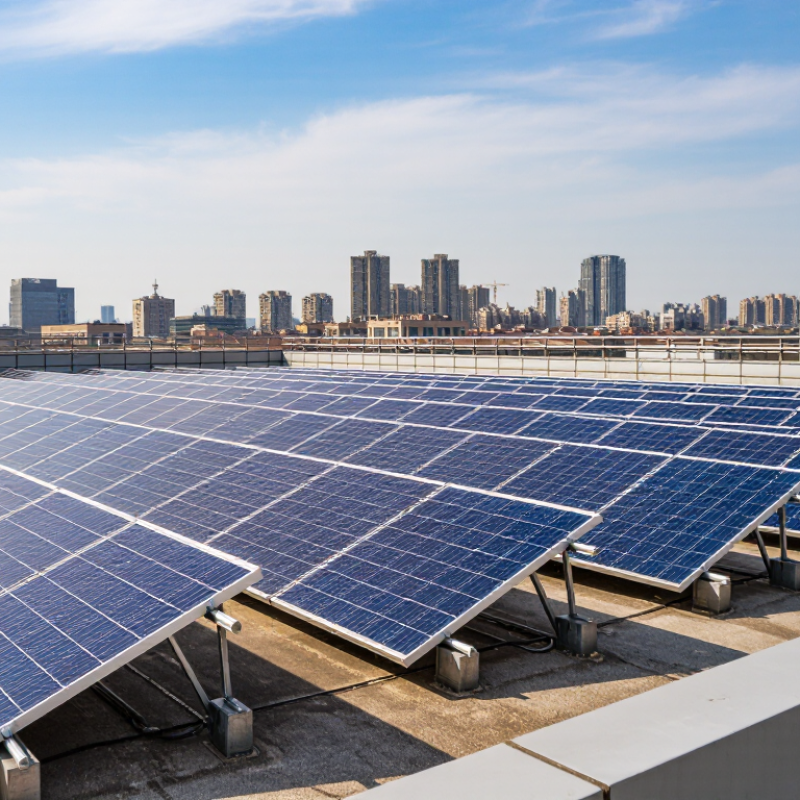
What Defines the Best Chinese Rooftop Solar Panels for Global Buyers?
What defines the best Chinese rooftop solar panels for global buyers? Efficiency matters, but it is not the whole answer. Real quality combines stable output, verified safety, clear documentation, and dependable support. The IEA PVPS Trends 2024 report estimates that global photovoltaic capacity exceeded 1.6 terawatts in 2023. This growth increases pressure on buyers to compare products beyond catalogue figures.
A strong rooftop panel should show tested performance under heat, humidity, and mechanical stress. Check IEC 61215 and IEC 61730 certification, not only a printed efficiency percentage. Review the temperature coefficient, annual degradation rate, and product warranty conditions. Independent testing also matters. The 2024 Kiwa PVEL PV Module Reliability Scorecard shows that testing can reveal differences in damp-heat, thermal-cycling, and mechanical-load performance. These details become practical on a hot warehouse roof or beside a coastal home. Chinese manufacturing offers scale and competitive pricing, yet lower cost can hide weaker service arrangements. That risk deserves attention.
Tips
Ask for third-party test reports, serial-number traceability, and sample inspection records. Confirm whether replacement panels match future production. Check local installer experience, spare-part access, and response times. IEA’s Solar PV Global Supply Chains report highlights China’s dominant role across polysilicon, wafers, cells, and modules. That scale supports supply, but it does not guarantee every factory performs equally. Buyers should compare degradation data carefully. Some warranty language remains difficult to interpret, even for experienced teams. Real projects often expose this gap.
How to Compare Panel Efficiency, Durability, and Warranty Coverage
For global buyers, rooftop solar panels should be compared beyond their headline wattage. Efficiency shows how much electricity a panel produces from limited roof space. Check the rated efficiency, temperature coefficient, and performance under low light. A panel with strong laboratory results may produce less on a hot rooftop. Roof temperature matters.
Durability depends on more than a thick frame. Review certified resistance to hail, wind, snow, humidity, and salt mist. Coastal buildings need careful corrosion protection, while snowy regions require suitable mechanical-load ratings. Examine the junction box, cable quality, and installation instructions. Small component failures can create expensive service visits. No panel fits every roof.
Warranty coverage needs close reading. Separate the product warranty from the power-performance warranty. Confirm the promised degradation rate, remaining output after 25 or 30 years, and the process for submitting a claim. Some policies cover replacement panels but exclude labor, transport, or roof access. That difference can change the real project cost. Check whether coverage transfers to a new property owner and whether local support is available.
I have seen buyers focus on efficiency and overlook documentation. That is a costly habit. Request test reports, serial-number tracking, and clear warranty contacts before ordering. Independent certification adds confidence, but it cannot replace a qualified site inspection. Even careful comparisons contain uncertainty. Roof shading, dust, wiring losses, and installation quality still affect actual output.
How to Verify Manufacturers, Certifications, and Export Compliance
For global buyers, the best Chinese rooftop solar panel is not simply the cheapest model. It is supported by traceable production, tested performance, and clear export records. Request the manufacturer’s legal registration, factory address, and recent production photos. Compare these details with independent business records and a live video inspection. Small inconsistencies matter. A polished website proves little.
Ask for technical datasheets, serial-number samples, and reports from accredited laboratories. Check IEC 61215 and IEC 61730 testing, plus requirements in your destination market. Confirm that each certificate names the exact model, factory, and revision. Generic certificates create avoidable risk. Review temperature coefficients, warranty terms, degradation limits, and insurance coverage. Order samples before approving a container. Packaging damage, weak connectors, or unclear labels may appear only during transit. A report once seemed sufficient to me; a model mismatch later exposed that weakness.
Export compliance requires more than a commercial invoice. Verify customs registration, product classification, origin documents, and shipping paperwork. Request a recent redacted bill of lading when appropriate. Screen the supply chain for forced-labor concerns and documented material traceability. Check payment details carefully. The bank account should match the contracted legal entity. Use third-party pre-shipment inspection, including pallet-label photos and flash-test results. No process is perfect. Keep records, define acceptance criteria, and place unresolved questions in the contract.
What Are China’s Best Rooftop Solar Panels for Global Buyers?
Standards and quality-management benchmarks to verify when evaluating a photovoltaic manufacturer, its documentation, and export readiness.
The years shown are the publication years of widely used editions or frameworks: IEC 61215 for photovoltaic module design qualification, IEC 61730 for module safety qualification, IEC 62941 for manufacturing quality systems, ISO 9001 for quality management, and ISO 14001 for environmental management. Buyers should request valid certificates, the exact factory address and scope, accredited laboratory reports, serial-number traceability, and destination-market export documents. Certification requirements vary by country and project.
Reference basis: IEC standards catalogue and ISO official standard pages.
What Costs, Risks, and Installation Factors Should Buyers Evaluate?
For global buyers, the best Chinese rooftop panels are not always the cheapest modules. They should fit the roof, climate, budget, and local rules. IRENA’s Renewable Capacity Statistics 2024 recorded 1,419 GW of global solar capacity at the end of 2023. Scale has reduced prices, but it has also created uneven quality. Compare efficiency, temperature coefficient, mechanical load, degradation rate, and testing records. Fraunhofer ISE reported commercial module efficiencies commonly near 20–23% in its Photovoltaics Report 2024. Higher output per square metre can reduce mounting and labor costs.
Request a landed-cost quote, not only a factory price. Include freight, insurance, duties, port handling, VAT, local delivery, and replacement logistics. Check whether each panel matches the inverter’s voltage range and the roof’s wind and snow loads. NREL’s 2024 degradation review found a median PV degradation rate near 0.5% annually, although projects vary. Ask for independent test certificates, serial-number records, production dates, and a written warranty process. A long warranty means little if nobody can enforce it. Buyers often underestimate this risk.
Tips:
Audit a sample factory before payment, or hire an accredited inspector. Test insulation, flash data, appearance, and electroluminescence. Confirm IEC 61215 and IEC 61730 documents with the issuing laboratory. Ask a local installer to review fire access, roof penetrations, grounding, and permits. Keep spare modules. It sounds overly cautious, but one damaged shipment can erase a small price advantage.