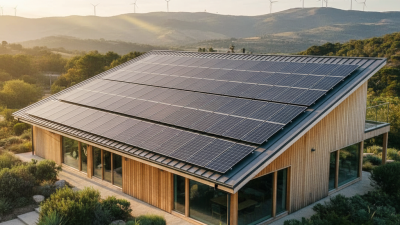
Top 10 Benefits of Solar Panel Installation for Businesses?
In an era where sustainability is becoming a priority, solar panel installation has gained significant traction among businesses. Companies are exploring renewable energy to reduce costs and minimize their environmental footprint. The transition to solar energy promises not only financial benefits but also enhances corporate reputation.
However, implementing solar panel installation is not without challenges. Initial costs can be high, and businesses face decisions about location and technology. Yet, these hurdles are often outweighed by long-term savings and energy independence. Many businesses report remarkable reductions in utility bills after transitioning.
Moreover, adopting solar energy can lead to tax benefits and grants that enhance business profitability. The reliability of solar technology continues to improve as innovations emerge. Overall, solar panel installation represents a critical step toward sustainable growth for businesses today.

Understanding Solar Panels and Their Functionality for Businesses
Solar panels harness sunlight to generate electricity. They convert solar energy into power for businesses. This technology is not only eco-friendly but also cost-effective in the long run. Understanding how solar panels work is crucial for businesses that want to reduce energy costs.
Solar panels comprise photovoltaic cells. These cells absorb sunlight and create an electric current. This current can power everything from lights to machinery. Businesses can lower their reliance on conventional energy sources. This shift can significantly cut down operating costs.
Consider the positioning of your solar panels. The ideal angle and direction can maximize energy absorption. Look for professionals who can evaluate your space accurately. Regular maintenance is key to ensuring optimal performance. Clean panels can improve efficiency and thus, profitability. Make informed decisions to ensure a worthwhile investment. Evaluate local regulations to avoid potential pitfalls in your installation process.
Cost Savings and Financial Incentives of Solar Panel Installation
Solar panel installation can bring significant cost savings for businesses. By generating their own electricity, companies can reduce reliance on grid power. This leads to lower utility bills and faster financial returns. The initial investment might seem high, but the long-term savings can be substantial. Many businesses see a decrease in energy costs of 20% to 50% after installation. Such savings enhance overall profitability.
Financial incentives also play a crucial role in making solar energy accessible. Governments often provide tax credits, rebates, and grants to support solar initiatives. These incentives can offset installation costs significantly. Some businesses may even find programs to finance their systems, allowing them to pay over time. However, navigating these incentives can be complex, necessitating professional guidance to fully benefit.
While the benefits are considerable, businesses must critically assess their energy needs and site suitability. Not every location receives equal sunlight, and some may face higher installation costs. Evaluating long-term sustainability and potential hurdles is essential. Engaging with experts can clarify these challenges, ensuring informed decisions are made regarding solar investments.
Environmental Benefits: Reducing Carbon Footprint with Solar Energy
Solar energy is becoming a game changer for businesses aiming to reduce their carbon footprint. A report from the International Energy Agency indicates that solar power could account for over 20% of global electricity generation by 2040. This shift not only supports the environment but also enhances corporate image.
Businesses contribute significantly to greenhouse gas emissions. The U.S. Environmental Protection Agency states that commercial buildings are responsible for nearly 40% of total carbon dioxide emissions from energy use. By adopting solar energy, companies can cut their emissions by 50% or more. This reduction helps fight climate change and positions businesses as leaders in sustainability.
Many organizations see additional benefits. According to a study by the National Renewable Energy Laboratory, switching to solar could save businesses up to 75% on energy bills over 20 years. However, transitioning to solar isn't always straightforward. Challenges include high initial costs and the need for proper site assessments. Despite these hurdles, the long-term environmental and financial benefits make solar installation a worthwhile consideration for businesses seeking to reduce their carbon footprint.
Enhancing Business Reputation and Attracting Eco-Conscious Customers
Installing solar panels is not just about reducing energy costs; it significantly enhances a business’s reputation.
Companies that adopt renewable energy practices are viewed as environmentally responsible. This commitment attracts
eco-conscious customers who prioritize sustainability in their purchasing decisions. By showcasing their green
initiatives, businesses can stand out in competitive markets. Customers often seek brands that align with their
values, and solar energy usage is a strong indicator of this alignment.
However, the transition to solar may face hurdles. Some business owners have concerns about the initial investment
required. It can be daunting to navigate the complexities of solar technology. Yet, acknowledging these challenges
opens the door for proactive solutions. Many organizations can assist in the process, ensuring a smoother
transition. Moreover, businesses must continuously educate themselves on solar innovations. Staying informed
fosters credibility and strengthens the relationship with environmentally aware consumers.
Embracing solar energy is a journey, not just a decision. It requires ongoing commitment and adaptation. The
evolving landscape of renewable energy can be complex, and businesses may need to rethink their energy strategies
over time. While the benefits are evident, the path to becoming a leader in sustainability calls for an attentive
and persistent approach. Ultimately, the integration of solar energy promotes not only good business practices
but also contributes to the broader goal of environmental stewardship.
Long-Term Energy Independence and Stability for Business Operations
Energy independence is crucial for businesses today. Installing solar panels can provide long-term stability. By harnessing the sun’s power, companies can reduce reliance on fluctuating energy markets. This stability enhances budgeting and financial planning, giving businesses more control over their expenses.
Consider the specifics of your location. Not all areas receive equal sunlight. Conduct a site assessment to evaluate optimal panel placement. This ensures maximum efficiency and energy capture. Regular maintenance checks are essential. While solar panels are low maintenance, occasional cleaning and examinations can prevent performance drops.
Investing in solar energy might feel daunting. Understanding the potential return on investment can ease this concern. Calculate your savings on electricity bills over time. The initial costs may seem high, but the long-term benefits can outweigh these early expenses. Planning ahead helps address these concerns. Properly managed, solar power can lead to a more sustainable and economically sound operation.
Top 10 Benefits of Solar Panel Installation for Businesses
| Benefit |
Description |
Estimated Savings ($/year) |
| Energy Cost Reduction |
Solar panels significantly lower energy bills by providing an alternative to grid power. |
$5,000 |
| Tax Incentives |
Businesses can take advantage of federal and state tax credits for solar installations. |
$15,000 |
| Increased Property Value |
Solar installations typically enhance property value, making it more attractive to buyers. |
$10,000 |
| Energy Independence |
Solar power reduces dependence on external energy sources, enhancing stability. |
N/A |
| Low Maintenance Costs |
Solar panels require minimal maintenance, offering lower long-term costs. |
$500 |
| Positive Brand Image |
Businesses that go solar are often viewed as environmentally conscious, improving brand reputation. |
N/A |
| Grid Security |
Distributed solar reduces the risk during energy grid failures or outages. |
N/A |
| Job Creation |
Solar projects create local jobs in installation, maintenance, and tech support. |
N/A |
| Long-term Investment |
Solar panels can last 25-30 years, providing long-term savings on energy costs. |
$50,000 |
| Contribution to Sustainability |
Adopting solar energy contributes to global sustainability goals and reduces carbon footprint. |
N/A |