
Blogs

10 Essential Tips for Choosing the Right Solar Panel System

Choosing the right solar panel system can be daunting. With numerous options available, potential buyers may feel overwhelmed. However, industry expert Dr. Sarah Thompson emphasizes, "Selecting the right solar panel system can lead to significant long-term savings." This highlights the necessity of a carefully considered choice.

One key aspect is understanding your energy needs. An effective solar panel system should align with your household consumption. Additionally, the quality of materials used can greatly influence efficiency and durability. Low-quality panels may appear cost-effective but can lead to more significant expenses over time.

Moreover, technology evolves. New advancements emerge regularly. It’s vital to stay updated on the latest features and innovations in the solar panel system market. Finally, consider installation and maintenance. While professional installation may seem costly, it ensures optimal performance and safety. Reflecting on these factors will empower you to make a more informed decision.

10 Essential Tips for Choosing the Right Solar Panel System

Understanding Your Energy Needs and Consumption Patterns

Understanding your energy needs is crucial when selecting a solar panel system. Start by evaluating your electricity bills. Look for the average monthly consumption. This will indicate how much energy you need. A clear picture helps in choosing the right system size.

Consider seasonal variations in your energy use. Many households consume more electricity in summer due to air conditioning. Track your usage patterns over the year. Understanding these fluctuations will guide your decision. A system too small might lead to unmet energy needs.

Take note of your energy sources. Are you relying heavily on electricity for heating or cooking? This matters. It can influence your solar panel requirements. Also, explore potential energy savings through efficiency upgrades. Sometimes, reducing energy consumption can be more beneficial than increasing solar capacity. Reflecting on these aspects ensures a tailored solution for your home.
Evaluating Different Types of Solar Panel Technologies

10 Essential Tips for Choosing the Right Solar Panel System

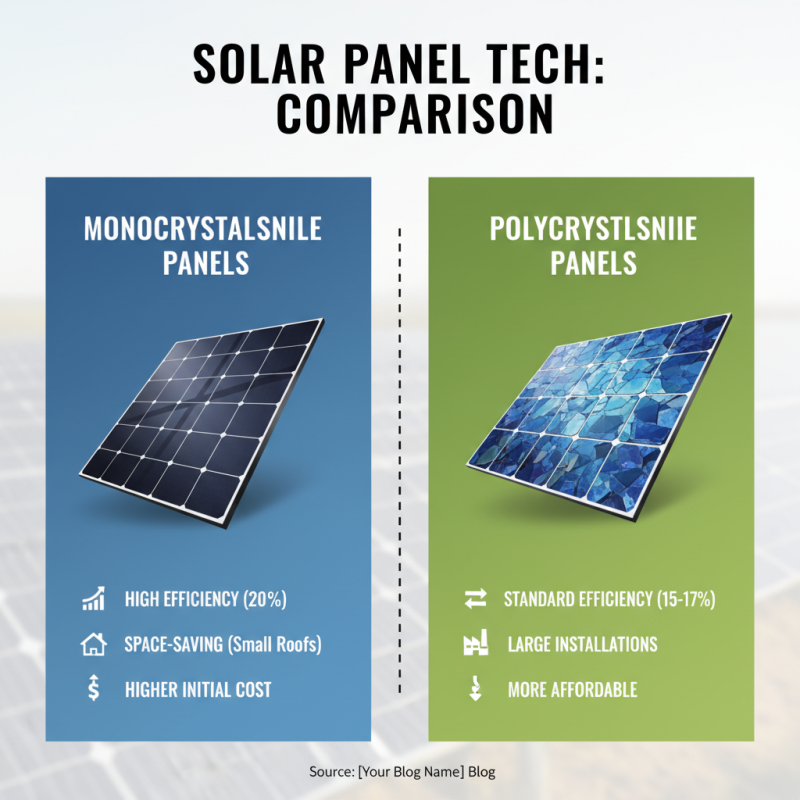
When evaluating different types of solar panel technologies, efficiency is a key factor. Monocrystalline panels are known for high efficiency, usually above 20%. They take up less space, making them ideal for small roofs. However, they often have a higher initial cost. On the other hand, polycrystalline panels are more affordable. Their efficiency rates hover around 15-17%, which might seem low, but they work well in larger installations.

Thin-film solar panels offer unique advantages. They are lightweight and flexible, allowing for diverse applications. However, their efficiency can be a drawback, typically ranging from 10-12%. This means you may need more space for installation. Choosing the right technology involves trade-offs between budget, space, and expected performance. Consider your specific needs carefully. Solar energy systems require long-term commitment and investment. Make sure to do thorough research before deciding. Each technology has its strengths and weaknesses. Balancing these aspects can lead to a more satisfying outcome.

Assessing Roof Space and Installation Preferences

When assessing roof space for solar panel installations, a few key factors come into play. First, evaluate the orientation of your roof. South-facing roofs typically provide the best sunlight exposure, while north-facing roofs may limit energy production. Consider any shading from nearby trees or taller buildings. A shaded panel can significantly reduce overall efficiency.

Next, think about the installation preferences. Do you want a flush mount or a tilted setup? Flush mounts integrate seamlessly but may trap heat. Tilted systems can maximize sun exposure but require additional structural support. Understand the pros and cons of each option before deciding.

Tip: Measure your available roof space precisely. If you have limited space, prioritize high-efficiency panels. These can generate more energy per square foot. Additionally, consider future needs. If you plan to expand your energy consumption, factor that into your design. Always consult with a professional to evaluate your choices. This insight will ensure you select a solar panel system that fits your home perfectly.

10 Essential Tips for Choosing the Right Solar Panel System - Assessing Roof Space and Installation Preferences

Tip Number Tip Description Consideration Factor Impact on Performance
1 Evaluate your roof space for solar panel installation. Available square footage, roof angle Optimal energy generation potential
2 Consider shading from nearby trees or structures. Location of obstructions Reduces efficiency during peak sunlight
3 Assess your current energy needs and usage. Monthly energy bills Determines the size of the solar system
4 Choose the right type of solar panel for your needs. Monocrystalline, polycrystalline, thin-film Affects efficiency and cost
5 Evaluate the installation options available. Roof-mounted vs. ground-mounted Impacts installation complexity and cost
6 Research local solar incentives and rebates. State and federal solar programs Can significantly reduce upfront costs
7 Consider future energy needs and expansion. Projected energy consumption increase Ensures long-term effectiveness and savings
8 Select a reputable installer with good reviews. Research online reviews and ratings Quality of installation affects performance
9 Understand the warranty options offered. Manufacturer and installer warranties Protection against equipment failure
10 Calculate the return on investment (ROI). Comparing costs versus savings Determines financial viability of investment

Investigating Solar Panel Efficiency Ratings and Warranties

When selecting a solar panel system, efficiency ratings and warranties are crucial to consider. Efficiency ratings indicate how much sunlight a panel converts to electricity. Higher ratings are better, but they often come with a higher price tag. Look for panels with efficiency ratings between 15% and 22%. This range offers a good balance of performance and cost. A lower efficiency panel may require more space, which can be a disadvantage if your roof is small or has shading issues.

Warranties provide peace of mind. Most solar panels come with a performance warranty and a product warranty. The performance warranty typically lasts 25 years, ensuring that the panel will still function at a certain percent of its original efficiency. Pay attention to the details. Some warranties may seem appealing, but they may be limited by specific conditions. It is essential to read the fine print. A warranty that’s too restrictive could leave you vulnerable if problems arise. Always inquire about the warranty terms and the company's reputation for honoring them. This knowledge will empower you to make an informed decision.

Comparing Costs, Incentives, and Financing Options for Solar Systems

When considering a solar panel system, costs and financing options play a crucial role. The average cost of residential solar systems in the U.S. has dropped by about 70% over the past decade, making solar energy more accessible. However, the initial investment can still be significant. Homeowners should carefully compare upfront costs, installation fees, and long-term savings.

Understand the incentives available in your area. Many states offer tax credits, rebates, or performance-based incentives. According to the Database of State Incentives for Renewables & Efficiency (DSIRE), over 1,000 incentive programs exist across the U.S. These can reduce the effective cost of a solar panel system significantly. Exploring all local and federal incentives is crucial for maximizing cost efficiency.

Consider financing options as well. Some homeowners may choose cash purchases, loans, or solar leases. A solar loan can allow you to install a system without the high initial cost. Research shows that solar loans have increased in popularity by 28% recently, reflecting consumer interest in flexible financing. Finding the right balance between upfront costs and monthly payments is vital for your budget.