Why Choose Commercial Solar Installers for Your Business?
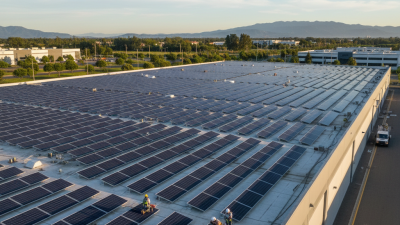
For many businesses, solar is no longer an abstract sustainability promise. It is visible infrastructure on a roof, carport, or unused parcel. Choosing experienced commercial solar installers can turn that space into a measured energy asset. They assess roof strength, shading, electrical capacity, consumption patterns, and future expansion before recommending equipment. That practical inspection matters. A warehouse with bright afternoon sunlight may still lose production through nearby trees or aging wiring.
Energy expert Amory Lovins has said, “The cheapest energy is the energy you don’t use.” His point supports a wider business lesson: efficiency should accompany solar investment. Skilled commercial solar installers can identify inefficient lighting, peak-demand habits, and storage opportunities before finalizing a system. They also coordinate design, equipment selection, monitoring, maintenance, and safe grid connection with appropriate professionals. The result should be more than a row of panels. It should be a system that fits daily operations.
Still, solar is not a perfect shortcut. Weather changes. Roof repairs can complicate planning. Forecast savings may differ from actual performance. A confident sales presentation cannot replace site data and careful financial review. Businesses should ask for clear production estimates, realistic maintenance expectations, and evidence of completed commercial projects. Good installers welcome those questions. They explain limitations instead of hiding them. That honesty may feel less exciting, but it builds trust. In the following discussion, we will examine why professional installation can reduce uncertainty, protect business continuity, and support a more resilient energy strategy.

Assessing Commercial Solar ROI: 90% PV Cost Decline Since 2010 (IRENA)
Why Choose Commercial Solar Installers for Your Business?
IRENA reports a 90% decline in photovoltaic costs since 2010. This shift has made commercial solar more financially accessible. For many businesses, lower equipment prices can improve payback periods. Yet price alone does not determine return on investment. Electricity rates, roof condition, shading, system size, and financing terms also affect results. Commercial installers assess these details before recommending a design. They can match panel output with daytime demand, such as refrigeration, machinery, or office cooling.
Not with promises.
A professional assessment should include estimated annual production, maintenance costs, degradation, and available incentives. It should also explain how local grid rules affect exported electricity. A warehouse with a broad, unshaded roof may achieve strong savings. A shaded building may need a smaller system or structural upgrades. Installation quality matters too. Poor wiring, weak mounting, or limited monitoring can reduce expected performance. Experienced teams document inspections and explain how faults will be handled. That matters.
No forecast is perfect. Weather varies, utility prices change, and business operations may expand. One weakness in many proposals is excessive confidence in predicted savings. Ask for conservative and optimistic scenarios. Compare the assumptions, not only the headline payback period. A credible commercial installer should show how the 90% PV cost decline influences the project, while admitting where uncertainty remains. Review the figures with an accountant and an electrical professional before approving the work.
Matching System Design to Business Loads Using NREL Modeling Standards
Commercial solar installers do more than place panels on a roof. They match system design to real business loads. Experienced installers collect 15-minute interval data, utility bills, operating schedules, and future expansion plans. They then use NREL-aligned modeling methods, including hourly weather files, shading estimates, system losses, and equipment performance assumptions.
NREL’s PVWatts and System Advisor Model support production estimates across changing weather conditions. This matters when a warehouse peaks at noon, but an office peaks earlier. Battery sizing also depends on demand charges, backup goals, and load flexibility. IRENA reported that global solar capacity increased by 345 gigawatts in 2023. That rapid growth shows solar’s scale, but not every commercial roof deserves the same design. A larger array can create unwanted exports. A smaller system may miss valuable peak-load savings.
Tips: Request an hourly production and load comparison. Ask installers to show shading losses, degradation, curtailment, and sensitivity cases. Check whether assumptions match your actual operating hours. A model is not truth. It is a decision tool. Meter data can still be incomplete, and weather cannot be perfectly predicted. That is where professional review matters. The best design may look less impressive on paper, yet perform better during your busiest hours.
Managing Permits and Safety Under Commercial PV Codes and OSHA Rules
Choosing commercial solar installers means more than comparing equipment prices. Experienced teams manage permits before panels arrive. They review zoning limits, utility requirements, structural drawings, and local electrical rules. Each jurisdiction may interpret commercial PV codes differently. The authority having jurisdiction often expects clear plans, load calculations, conductor details, and equipment listings. A qualified installer coordinates submissions and tracks revisions. That experience can prevent a stalled inspection and protect your schedule.
Safety planning must continue from design through commissioning. Crews need documented training, fall protection, safe ladder access, and controlled work zones. Electrical work requires suitable PPE, de-energization procedures, and lockout/tagout practices where applicable. OSHA rules also address roof hazards, lifting operations, housekeeping, and emergency response. On a busy warehouse roof, a loose cable or misplaced tool can create danger below. Installers should brief workers daily and record corrective actions. Small details matter.
Still, no plan is perfect. Weather changes, hidden roof damage, or an unexpected shutdown can expose weak assumptions. Reliable contractors communicate with inspectors, owners, and workers in plain language. They keep permit copies, inspection records, test results, and as-built drawings organized. Before energizing, they verify grounding, labeling, disconnect access, and protective settings against approved documents. Businesses should ask who holds each responsibility, rather than simply asking whether the installer handles permits. That question may feel basic. It is not.
Why Choose Commercial Solar Installers for Your Business?
Managing Permits and Safety Under Commercial PV Codes and OSHA Rules
Commercial PV installers help coordinate authority-having-jurisdiction permit reviews while applying measurable OSHA and electrical-code requirements. The chart shows selected U.S. regulatory benchmarks in their original units: fall protection at 6 feet, ladder access extending 3 feet above an upper landing, the OSHA 4:1 ladder setup ratio, and NEC rapid-shutdown voltage reduced to 30 volts within 30 seconds outside the PV array boundary. Local permit requirements and adopted code editions may vary.
Sources: OSHA 29 CFR 1926.501(b)(1), OSHA 29 CFR 1926.1053(b)(5)(i), and NEC 690.12 rapid-shutdown requirements.
Verifying Energy Value: Solar PV LCOE Reached $0.044/kWh in 2023 (IRENA)
Why Choose Commercial Solar Installers for Your Business?
Solar PV is now a serious cost-control option. IRENA’s Renewable Power Generation Costs in 2023 reported a global weighted-average LCOE of $0.044/kWh. That figure matters. It shows how efficiently new utility-scale solar can produce electricity. However, LCOE is not your final business tariff. It excludes some site-specific costs, including grid upgrades, financing, storage, and maintenance.
Commercial solar installers translate this energy value into a workable project. They assess roof strength, shade patterns, hourly demand, and electrical capacity. They also coordinate permits, grid connection studies, safety inspections, and performance monitoring. A small design error can reduce output for decades. Site assessments often reveal something unexpected, such as afternoon shade from a nearby building. The cheapest quotation may not be the lowest lifetime cost.
Tips:
Request a production model using local weather data. Check whether it includes degradation, downtime, insurance, and replacement costs. Compare the estimated cost per usable kilowatt-hour with your current utility bills. Ask for clear assumptions. Numbers can look precise while remaining uncertain. Your consumption may also change after installation, which deserves honest planning.
Sources: IRENA, Renewable Power Generation Costs in 2023; International Energy Agency, Renewables 2024.
Planning O&M and Warranties for Commercial PV Systems Lasting 25+ Years
Why Choose Commercial Solar Installers for Your Business?
Planning O&M and Warranties for Commercial PV Systems Lasting 25+ Years
A 25-year PV promise is not a maintenance strategy. Commercial installers should design O&M before commissioning, not after the first fault. IEA PVPS Task 13 reports a median module degradation rate near 0.5% annually across reviewed field data. At that rate, output can decline about 12% over 25 years, before inverter failures, shading, or soiling are considered. Small losses accumulate.
A competent installer maps access routes, drainage, string layouts, and isolation points. The O&M plan should define inspections, thermography, vegetation control, cleaning triggers, and response times. NREL’s PV Operations and Maintenance Best Practices report emphasizes monitoring, preventive maintenance, and clear performance baselines. These details matter when a rooftop fault appears during a hot afternoon.
Commercial warranties need separate reading. A module product warranty covers manufacturing defects, while a performance warranty addresses output thresholds. Inverters, monitoring equipment, labor, shipping, and roof penetrations may follow different terms. Do not assume one warranty covers the entire system. Ask for commissioning records, serial-number tracking, response procedures, and a responsibility matrix. Berkeley Lab’s Tracking the Sun reports show commercial projects vary widely in design and installed cost, making generic O&M budgets unreliable. Site-specific planning is safer. Still, forecasts can be wrong. Dust may arrive early, and replacement equipment may take weeks. A contingency fund helps.