
Industrial solar panels have become a practical option for factories, warehouses, and other energy-intensive sites. The International Energy Agency’s Renewables 2023 report recorded nearly 510 GW of renewable capacity additions worldwide that year, with solar PV accounting for about three-quarters. China led much of this expansion. The IEA’s Solar PV Global Supply Chains report found that China held more than 80% of global manufacturing capacity across several stages of the solar supply chain. The figures are striking. But production scale alone does not prove a specific factory’s quality or reliability.
IEA Executive Director Fatih Birol called solar “the new king of electricity” in the agency’s World Energy Outlook 2020. For global buyers, that growth makes choosing a manufacturer more important, not less. This guide introduces leading industrial solar panel manufacturers in China and the details buyers should examine: product specifications, factory capabilities, independent test records, warranties, and communication during sampling. A datasheet can look spotless. Real procurement is messier. Confirm that quoted performance figures match the exact module model, and ask how the supplier handles defects, packaging, and delivery changes. No ranking can replace factory-level checks, and this overview cannot certify any supplier. Use it as a starting point for careful comparison, especially when project conditions, installation design, and after-sales support vary.
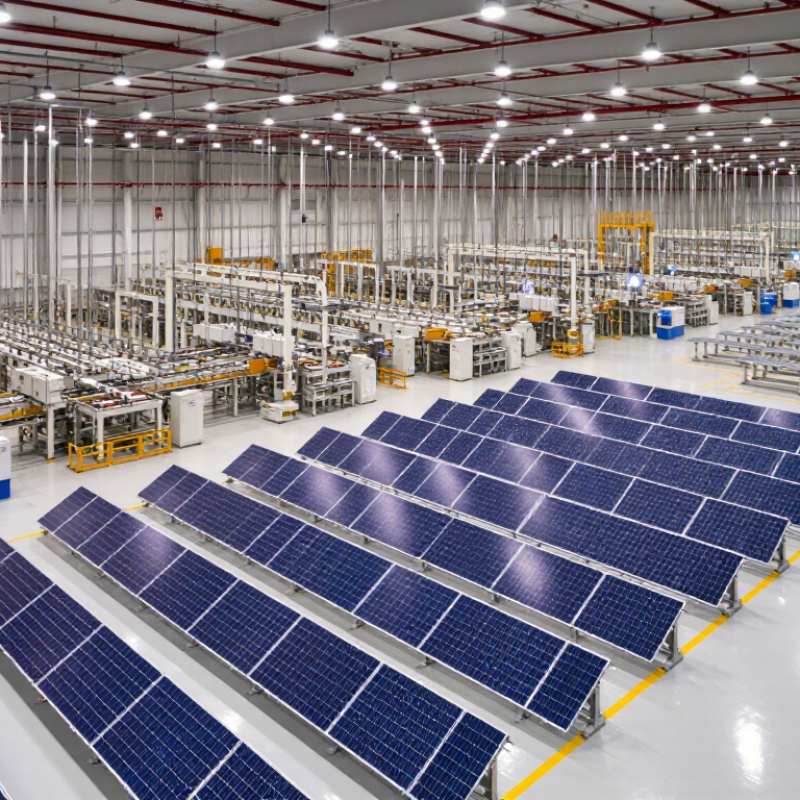
China’s industrial solar panel industry serves global buyers through large-scale production, varied module configurations, and coordinated export services. Buyers can discuss panel dimensions, power ratings, connector types, and packaging before placing an order. Those details matter when a project includes long warehouse roofs, dusty factories, or limited space for unloading.
Production capacity can support sizable orders, but capacity alone does not prove consistent quality. Buyers should review sample results, factory inspection records, and documentation for the exact product being purchased. Ask how panels are tested for output, insulation, and resistance to environmental stress. Keep the questions specific. A polished datasheet is not the whole story.
Export teams may help coordinate shipping schedules, packing plans, and technical documents with local project partners. Confirm who handles each step, and agree on how damaged goods or performance concerns will be assessed. Small details can become expensive delays. Communication may also feel smooth before payment and slower during production; it is worth checking response routines early. A clear agreement on inspection, delivery timing, and after-sales support gives global buyers a more practical basis for comparing suppliers.
A snapshot of capacity across key supply-chain stages in 2021, illustrating the scale of China’s manufacturing base for global buyers.
Source: International Energy Agency (IEA), Special Report on Solar PV Global Supply Chains (2022). Figures represent estimated shares of global manufacturing capacity in 2021.
When comparing Chinese solar panel manufacturers, look beyond advertised wattage and factory size. Ask for independent test reports that match the exact module model you plan to buy. Check power tolerance, temperature coefficients, and degradation figures. Ask how samples are selected and whether production units follow the same specifications.
Quality control should be visible in records, not just polished showroom displays. Request details on incoming cell inspection, lamination checks, electroluminescence testing, and final power sorting. Ask for serial-number traceability and a sample inspection report. Details matter. If possible, arrange a third-party factory audit or pre-shipment inspection. Still, a tidy production line cannot prove consistent performance across every shipment.
Review the warranty terms, claim process, and the manufacturer’s history of supporting overseas buyers. Confirm packaging protects modules from vibration and moisture during long-distance transport. Check whether technical documents, spare parts, and responses are available in a language your team can use. Ask for references from buyers in similar climates or project types. Ask for evidence. A low quote may reflect a different bill of materials, so compare cells, glass, frames, and connectors line by line. Some information may remain difficult to verify remotely; note that uncertainty before placing a large order.
China’s industrial solar manufacturers compete through scale, cell technology, and project-specific module design. The IEA’s 2022 report, Solar PV Global Supply Chains, found that China held over 80% of global solar manufacturing capacity across key production stages. This concentration supports broad product availability, but buyers should compare factories, not just country of origin. Leading suppliers commonly offer large-format modules using TOPCon or heterojunction cells, with bifacial options for reflective ground sites. Strong products specify power output, temperature coefficient, and degradation rates clearly.
Industrial strengths show up in details. A bifacial module can help on a bright, pale roof, while a low temperature coefficient matters on hot sites. The IEA PVPS Snapshot of Global PV Markets 2024 reported about 447 GW of new solar capacity installed worldwide in 2023, underscoring the need for reliable volume and delivery planning. Still, high output ratings alone do not prove durability. Review third-party test records, traceability, factory quality controls, and warranty terms. Some specifications look impressive; field conditions may be less tidy.
Tips: Ask for module test reports and a sample datasheet. Check whether stated power tolerances and degradation figures match the purchase contract. Compare carefully. A small detail can matter.
For global buyers, factory capacity should be measured in dependable monthly output, not a headline annual figure. Ask how many production lines run, what shifts are staffed, and how output changes during peak orders. Recent production schedules and sample-lot records can show whether quoted capacity reflects routine operations. Details matter.
Certifications help assess process control, but a certificate alone cannot prove that every panel suits your project. Check validity, issuing body, product-model coverage, and whether test reports match the offered module design. Common references include IEC 61215 and IEC 61730, alongside quality systems such as ISO 9001. Confirm documents directly, and ask how factory teams check failed cells, lamination defects, and final power ratings. Small defects count.
Global supply capability includes more than export experience. Confirm packaging strength, container-loading plans, shipment windows, traceability labels, and support for destination-specific documentation. Ask how delays, damaged cartons, or warranty claims are handled across time zones. Capacity can look convincing on paper; compare promised lead times with recent shipment records. No checklist is perfect.
| Manufacturer profile | Indicative annual module capacity | Cell capacity and integration | Typical product range | Relevant certifications and systems | Global supply capabilities |
|---|---|---|---|---|---|
| Large, vertically integrated producers | Approximately 20–100+ GW of nameplate module capacity per year; actual output and utilization vary. | Often operate substantial cell capacity; integration levels and technology mix differ by production site. | High-volume mono-crystalline silicon modules, including mainstream utility-scale and rooftop formats. | Module models are commonly tested to IEC 61215 and IEC 61730. ISO 9001, ISO 14001, and ISO 45001 may apply to management systems. North American projects may require UL certification for the specific model. | Typically suited to multi-container and project-scale orders, with export documentation and established freight arrangements. Delivery schedules remain dependent on product availability, destination, and trade conditions. |
| Established mid-to-large producers | Approximately 5–20 GW of nameplate module capacity per year. | May have in-house cell production, partial integration, or a mix of internal and externally sourced cells. | Commercial and utility modules, with product options varying by cell technology, dimensions, and power class. | IEC 61215 and IEC 61730 are common module standards. Buyers should check the certificate holder, factory location, and exact model designation; market-specific approvals vary. | Can generally support regular export orders and container shipments. Buyers should confirm production slots, packaging specifications, lead times, and after-sales arrangements for each order. |
| Specialized or smaller-scale producers | Approximately 1–5 GW of nameplate module capacity per year; some facilities may operate below rated capacity. | Integration is often limited or product-specific; cell sourcing and production arrangements should be verified. | May focus on selected module formats, customized specifications, or particular project and distribution channels. | Certification coverage can be narrower by model or destination. Request valid test reports and certificates for the exact product before ordering. | May serve overseas buyers through direct export or trading and logistics partners. Assess order capacity, warranty administration, and spare or replacement-product support. |
| Export-readiness checks for all profiles | Request current rated capacity, recent production data, and a clear distinction between nameplate capacity and actual shipment volume. | Confirm cell origin and technology, bill-of-material controls, factory traceability, and whether production is performed at the stated site. | Match module dimensions, electrical characteristics, connectors, and packaging to the project design and applicable local rules. | Check certificate validity and scope. IEC 61215 and IEC 61730 relate to module qualification and safety; UL, CE marking, and other approvals depend on the product and target market. | Agree on Incoterms, inspection procedures, shipping documents, insurance, delivery schedule, warranty terms, and the local process for handling claims. |
Note: Capacity figures are indicative market-size bands for manufacturer profiles, not verified figures for any specific company. Nameplate capacity is not the same as actual production or export volume. Certification and market-access requirements must be confirmed for the exact module model, manufacturing site, and destination.
For global buyers, comparing Chinese solar panel suppliers should begin with the project specification, not the lowest quoted price. Match module dimensions, power class, temperature coefficient, and performance tolerances to the site design. Ask for current IEC test certificates, factory quality procedures, and sample serial-number traceability. Check whether the quoted warranty covers product defects and long-term power output, and read the exclusions carefully. Small details matter. A certificate alone does not show how consistently a factory controls production.
Supply concentration deserves attention. The International Energy Agency’s 2022 report, Solar PV Global Supply Chains, found that China held more than 80% of global manufacturing capacity across key solar PV stages. That scale can support competitive pricing, but buyers should still compare production capacity, export experience, and backup plans for material or shipping delays. Request a dated production schedule and clarify who pays for packaging, inspection, and port handling. The spreadsheet may still miss hidden costs.
Plan procurement around delivery windows and independent checks. The IEA PVPS Snapshot of Global PV Markets 2024 estimated that at least 456 GW of solar capacity was installed worldwide in 2023, reflecting a fast-moving market. Confirm that factory test reports match the exact model and batch being purchased. Before shipment, agree on inspection criteria, spare-module quantities, and remedies for damage or short shipment. Allow time for document review; rushing that step is an easy mistake.