
China is a major source of industrial solar panels, serving factories, warehouses, and utility-scale projects worldwide. But identifying the “top” manufacturers takes more than comparing company size or published production capacity. Buyers should examine module efficiency, product warranties, quality controls, and experience with projects in similar climates. A panel operating on a hot factory roof faces different conditions from one installed in a cooler region.
A useful manufacturer review also looks beyond the product sheet. Check whether the supplier can explain its testing process, provide clear product documentation, and support the project after delivery. Details matter: consistent serial-number tracking, realistic lead times, and responsive technical help can affect a project long after installation. Certifications may offer useful evidence, but they do not replace independent checks or careful contract review. Claims deserve scrutiny.
There is no perfect shortlist. Company rankings can change with market conditions, and public information may not reveal how reliably a manufacturer handles quality issues. Smaller producers may also be overlooked, even when their products suit a particular project. This guide introduces notable Chinese manufacturers and the factors buyers can use to compare them. Treat it as a starting point, not a final purchasing recommendation; verify current specifications and supplier credentials before making a decision.
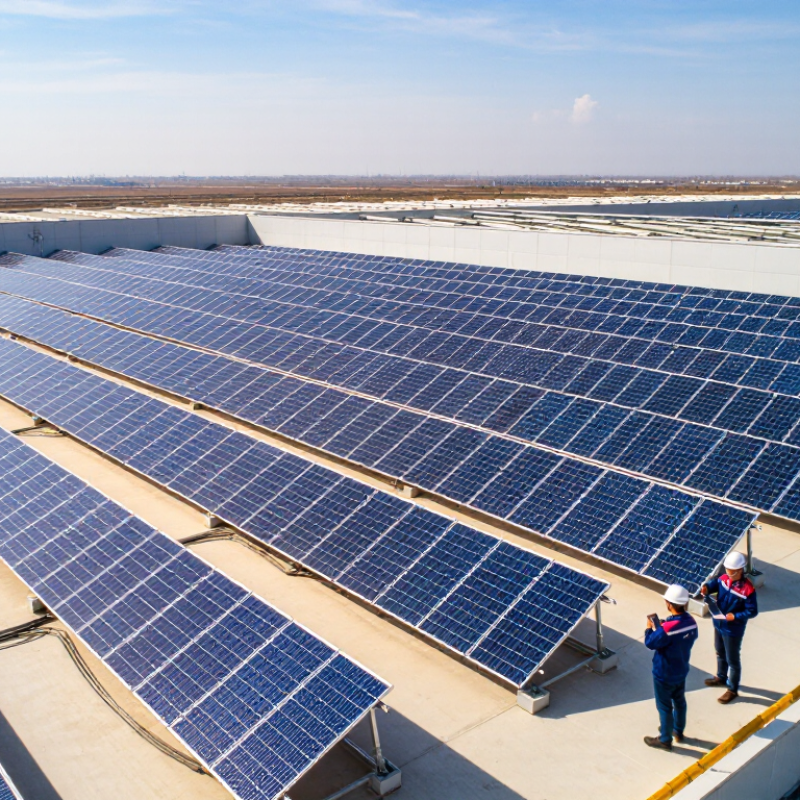
An industrial solar panel manufacturer does more than assemble cells into modules. It designs products for demanding sites, such as factory roofs, warehouses, and ground-mounted power projects. That work starts with understanding operating conditions: heat, wind, dust, roof loading, and expected maintenance access. A panel that performs well in a controlled test may behave differently after years beside a hot, dusty production line.
Reliable manufacturers use documented quality controls throughout production. They check cell appearance, soldering, lamination, and electrical output, then keep records that help trace a module to its production batch. Testing for power performance and environmental durability matters, but test reports should be current, relevant, and independently verifiable. Ask how results were measured. Details matter.
Industrial projects also need practical engineering support. Manufacturers should provide clear electrical specifications, installation guidance, and realistic delivery information. They may adapt dimensions or module characteristics to project needs, though customization can add cost and complexity. Not every request makes sense. A long warranty is useful only when its terms, exclusions, and service process are understandable. Buyers should compare actual documentation, production consistency, and support capacity—not rely on a polished brochure alone. Even strong suppliers can have limits, and those limits deserve a candid conversation.
China’s leading industrial solar manufacturers are identified through verifiable production, product testing, and delivery records—not factory size alone. IEA PVPS’s Snapshot of Global PV Markets 2024 estimated at least 446 GW of new solar capacity was installed worldwide in 2023. That scale makes consistent quality and dependable supply essential.
The IEA’s 2022 report on solar supply chains found China held over 80% of global manufacturing capacity across key production stages. But capacity is not proof of reliability. Buyers should check audited factory processes, batch traceability, and independent test results against IEC module standards. Warranty terms and documented degradation rates matter, too. Small details count.
For industrial projects, useful evidence includes shipment history, operating references, and performance data from comparable climates. Check temperature coefficients, mechanical-load results, and output consistency across production batches. The weak point? Public figures can lag. A reported capacity may not reflect actual utilization or recent process changes, so document checks and technical due diligence should sit alongside headline rankings.
Chinese manufacturers serving industrial solar projects vary in scale, product range, and engineering support. Buyers often compare factories by annual production capacity, module test records, and experience with large rooftops or ground-mounted sites. Those details matter when a project needs thousands of panels delivered in coordinated batches. So does consistency between samples and shipped products.
Industrial installations also bring practical constraints. A warehouse roof may have limited load capacity, while a coastal facility faces salt exposure and strong wind. Manufacturers should provide clear specifications for module dimensions, output tolerances, and relevant durability tests. Ask how production batches are traced and how warranty claims are handled. Small details count.
Price alone is a weak guide. A lower quotation may exclude packaging, inspection, or technical support, so compare the full supply scope. Check whether the manufacturer can coordinate with the project’s inverter design and delivery schedule. Site conditions still need independent review; a product sheet cannot assess every roof or mounting structure. Even experienced teams miss things. Verify the documents, and keep a little room for uncertainty.
China’s leading industrial solar manufacturers are distinguished less by factory size alone than by how consistently they convert silicon into reliable modules. The IEA’s 2022 review of solar supply chains estimated that China held more than 80% of global manufacturing capacity across major production stages, including over 95% of wafer capacity.
Scale matters. So does process control.
At advanced factories, automated wafer handling and inline inspection help identify microcracks before modules leave the production line. Many manufacturers are moving beyond PERC cells toward TOPCon and heterojunction designs, which can improve conversion efficiency and performance in hot conditions. Bifacial modules also capture reflected light from the rear surface, making them useful over pale ground or reflective rooftops.
Production capability is not just a lab efficiency figure. It includes stable cell output, clean lamination, and testing for damp heat and thermal cycling.
Details matter.
Buyers should distinguish announced capacity from verified production and independently tested performance. A large facility can still face yield losses or uneven quality between batches. That is worth remembering.
Manufacturers with traceable testing records and clear warranty terms offer stronger evidence than headline capacity figures alone. Industry rankings change quickly, and public data do not always reveal factory-level defect rates.
Chinese supplier comparisons should begin with consistency, not headline wattage. The IEA’s 2022 Special Report on Solar PV Global Supply Chains estimates that China holds over 80% of global manufacturing capacity across key solar stages, and about 95% for wafers. This scale gives industrial buyers many options, but it cannot confirm an individual factory’s quality. A quotation is only a starting point.
Compare module power, temperature coefficients, degradation rates, and test results under identical conditions. Check that certificates cover the exact model and production site being offered. Ask for bill-of-materials controls, batch traceability, and independent test reports. These details matter when hundreds of modules must perform consistently across a large rooftop or ground-mounted site. Warranty terms deserve close reading, too: stated coverage is less useful without clear claim procedures and a financially stable manufacturer.
A factory audit can reveal whether inspection steps are documented and production records are easy to trace. Buyers should also assess delivery schedules, packaging, spare-module policies, and technical support across the project’s expected lifetime. I still find supplier comparisons difficult when test conditions differ. That uncertainty should be recorded, not hidden behind a simple price-per-watt ranking.