Discover the Benefits of Home Solar Panel Systems in China Today?
As the demand for renewable energy surges in China, the role of home solar panel systems has gained significant attention. Dr. Liu Wei, a renowned expert in solar energy technology, emphasizes, "Investing in a home solar panel system is not just smart; it's necessary for a sustainable future." This statement highlights the growing urgency for households to consider solar energy solutions.
Home solar panel systems offer numerous advantages. They reduce reliance on traditional electricity sources, which can be costly and environmentally damaging. With the rise in energy prices, homeowners are seeking alternatives that promote savings. Additionally, solar energy is abundant, providing a clean source that can power homes throughout the year. However, challenges remain. High initial costs and the complexity of installation can deter potential users.
Despite these obstacles, many are opting for solar solutions. Local governments have introduced incentives to ease the transition. The increased efficiency of solar technology also makes it a viable choice for many families. The shift to home solar panel systems in China not only supports energy independence but also contributes to global environmental goals. As more homeowners embrace this technology, the landscape of energy consumption in China is evolving.
Understanding Home Solar Panel Systems in China
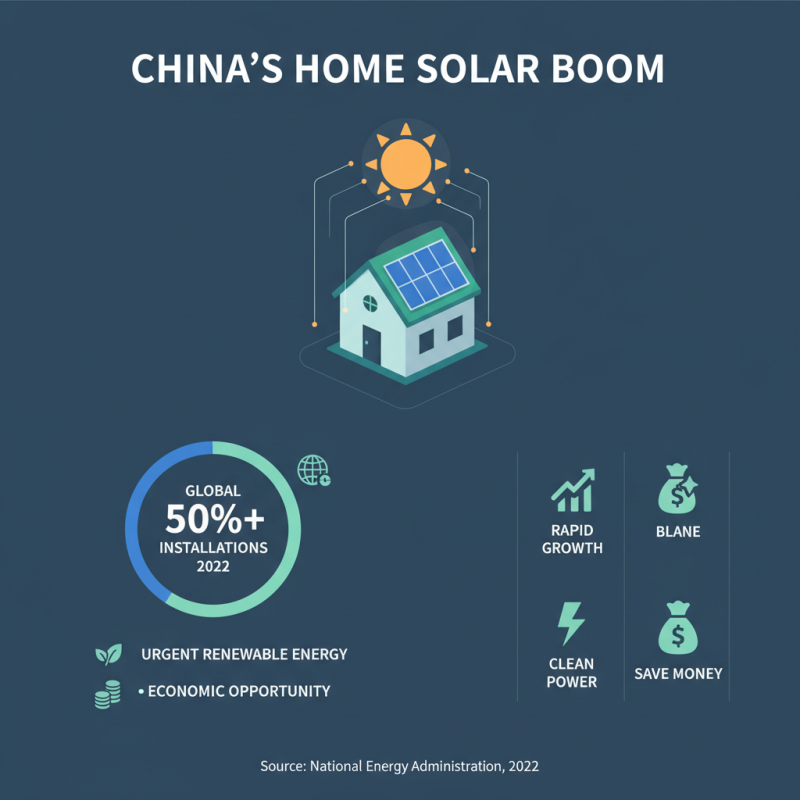
Solar panel systems are gaining popularity in China for numerous reasons. As of 2022, the National Energy Administration reported that China accounted for over 50% of global solar installations. This rapid growth highlights both the urgent need for renewable energy and the economic opportunities available in the sector.
Home solar systems not only help reduce electricity costs but also increase energy independence. Households can generate their own energy, minimizing reliance on external sources. For instance, a typical home solar system can save up to 30% on energy bills. However, initial installation costs might be a barrier for some homeowners, which remains a concern.
Despite these challenges, the long-term benefits are clear. Data from the China Renewable Energy Society indicates that solar energy can potentially replace up to 20% of coal usage by 2030. This shift could significantly reduce carbon emissions. Yet, there is still a need for better educational resources on solar technology to promote wider adoption.
Advantages of Solar Energy in Residential Settings
Solar energy offers significant advantages for residential settings. In China, homeowners are increasingly turning to solar panel systems. These systems harness the sun's power, reducing reliance on traditional energy sources. They lower electricity bills and can increase property values. A well-placed solar panel can cover a substantial portion of household energy needs.
Installing solar panels has ecological benefits as well. It reduces carbon emissions, contributing to a cleaner environment. However, not all homes are suitable for solar energy. Factors include roof orientation and shading. Some homeowners may face upfront costs that can be daunting. Each household must evaluate its unique situation before making the switch.
Despite potential challenges, many find solar panels a worthwhile investment. Innovations in technology continue to lower costs and improve efficiency. Homeowners must stay informed and seek expert advice. Engaging with local energy authorities can help make sound decisions. This emerging market holds promise for homeowners looking to embrace sustainable living.
Economic Benefits of Installing Solar Panels at Home
Home solar panel systems are becoming increasingly popular in China. Their economic benefits are significant for homeowners. By installing solar panels, families can greatly reduce their electricity bills. The initial investment may seem high, but the savings accumulate over time. Some households report a reduction of 50% or more in monthly energy costs.
Moreover, government incentives further enhance the financial appeal. Tax credits and rebates make it easier for families to switch to solar energy. However, not everyone may be eligible for these benefits. Each region has different policies, and homeowners need to do their research. Understanding local regulations is crucial.
The resale value of homes can also increase with solar installations. Potential buyers often see solar panels as a valuable addition. Yet, the market for solar-equipped homes is still developing. Some homeowners express concerns about the long-term reliability of solar systems. Maintenance issues can arise that may require unexpected expenses. Despite these concerns, many are realizing the benefits outweigh the risks.
Discover the Benefits of Home Solar Panel Systems in China Today
| Benefit |
Description |
Estimated Annual Savings (CNY) |
Carbon Emission Reduction (kg) |
| Reduced Electricity Bills |
Lower dependence on grid electricity leads to significant savings. |
2,500 |
1,200 |
| Government Incentives |
Various subsidies and tax breaks are available for solar panel installations. |
1,000 |
500 |
| Increased Property Value |
Homes with solar panels can sell for more than those without. |
N/A |
N/A |
| Energy Independence |
Less reliance on external energy sources leads to greater stability. |
N/A |
900 |
| Job Creation |
The solar industry generates jobs in manufacturing, installation, and maintenance. |
N/A |
N/A |
Environmental Impact of Home Solar Solutions
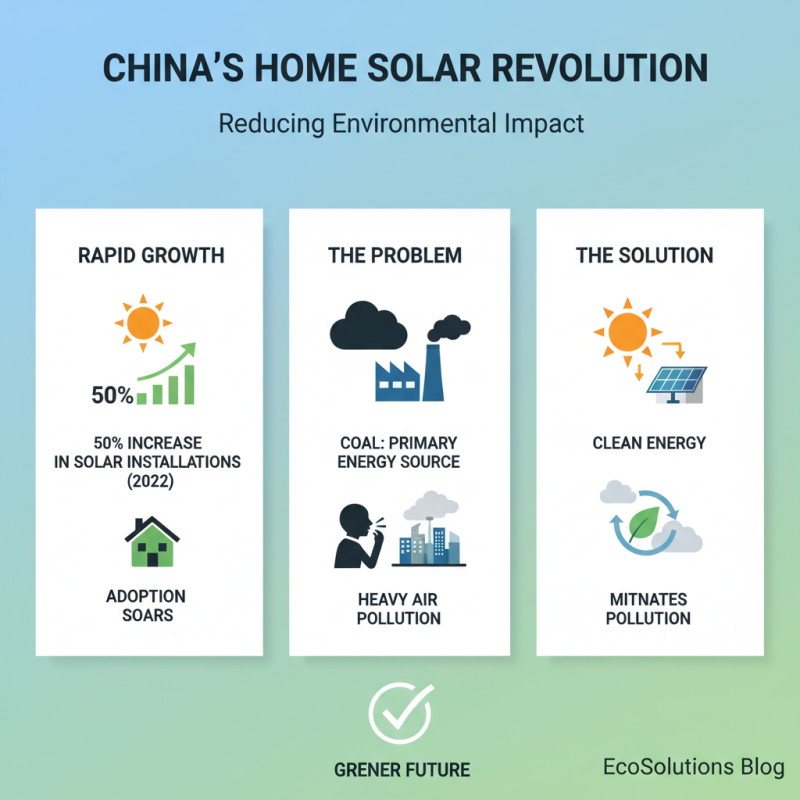
Home solar panel systems present a significant solution for reducing environmental impact in China. The country has seen a rapid increase in solar energy adoption, with reports indicating that solar installations grew by 50% in 2022 alone. This shift is crucial, as coal remains a primary energy source, contributing heavily to air pollution. Solar energy can help mitigate these damaging effects on the environment.
One compelling statistic is that home solar systems can reduce carbon emissions by up to 90% compared to traditional energy sources. This transition is vital for China's commitment to achieving peak carbon emissions by 2030 and carbon neutrality by 2060. However, the installation of solar panels requires consideration of factors such as space and initial investment. Many households face challenges when evaluating the best systems for their needs.
Additionally, there are concerns about the environmental cost of manufacturing solar panels. The production process involves resource extraction and energy consumption. Addressing these challenges includes improving production technologies and ensuring recycling practices for end-of-life panels. Engaging in open discussions about these issues can promote more sustainable practices within the solar industry.
Government Incentives for Solar Energy Adoption in China
In recent years, the Chinese government has implemented several incentives to boost solar energy adoption. Reports indicate a projected increase of 10% in solar panel installations by 2025. These measures include subsidies, tax rebates, and initiatives aimed at reducing the initial cost of solar systems. For instance, according to a 2022 government report, homeowners can receive up to 30% of installation costs back in the form of tax credits.
Understanding these incentives can greatly enhance your financial strategy when considering solar energy. Tips include researching local regulations to find available programs. Many provinces offer additional benefits. These can vary significantly, so being informed is critical. It's also important to evaluate the total cost against potential savings; there's often a lag before net benefits align with initial investments.
Despite the clear benefits, challenges remain. Not all local governments administer these incentives effectively. Sometimes, the application process can be confusing. Additionally, not every region supports solar equally, affecting potential energy generation. Cautious homeowners should weigh these factors carefully. It’s essential to consult with local energy experts to navigate these complexities effectively.
Benefits of Solar Panel Systems in China