Top 5 Tips for Forklift Collision Detection Systems?
Forklift operations are critical in every warehouse, yet accidents remain a significant concern. In fact, the Occupational Safety and Health Administration (OSHA) reports that about 85 fatalities occur in forklifts annually. Implementing a Forklift Collision Detection System can drastically reduce such incidents. This technology aims to protect workers and enhance workplace safety, yet not every facility has adopted these essential measures.
Despite technological advancements, numerous warehouses still rely solely on traditional safety protocols, leading to preventable accidents. A study by the National Institute for Occupational Safety and Health (NIOSH) highlights that effective collision detection systems can decrease accident rates by up to 30%. These systems utilize sensors and alert mechanisms to warn operators of potential collisions. However, many users overlook proper training, leading to underutilization of these systems.
Investing in a Forklift Collision Detection System should not be optional; it is a vital necessity. As businesses grow, truck traffic increases, which elevates risk factors. Some facilities may hesitate due to costs, yet the financial and human costs of accidents far outweigh the investment. A proactive approach is essential for safeguarding employees and maintaining productivity.
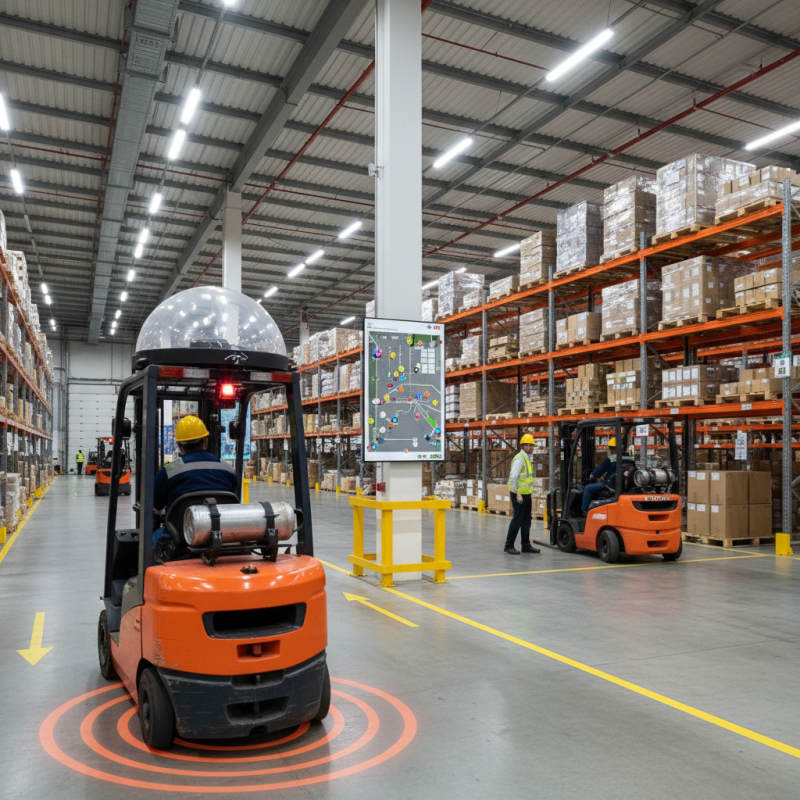
Understanding the Importance of Forklift Collision Detection Systems
Forklift collision detection systems have become essential in modern warehouses and factories. According to recent industry reports, accidents involving forklifts can lead to significant injuries and financial losses. In the U.S. alone, OSHA indicates that forklift incidents contribute to approximately 34,900 injuries annually. This emphasizes the importance of improving safety protocols.
These systems use various technologies to identify potential collisions. They can include sensors, cameras, and alarms. For instance, a study by the National Safety Council showed that implementing these systems reduced accident rates by up to 70%. However, the effectiveness can vary across different environments. Some workplaces may face challenges due to poor visibility or complex layouts, making it crucial to assess individual needs.
Investing in proper training alongside these systems is vital. Operators often feel overconfident, leading to risky behaviors. Data from the Bureau of Labor Statistics reveals that human error accounts for nearly 90% of accidents. Therefore, fostering a culture of safety remains paramount. Regular audits and feedback can help refine existing protocols. While collision detection systems are valuable, they should not replace proper training and awareness.
Key Technologies Used in Forklift Collision Detection Systems
Forklift collision detection systems are crucial for workplace safety. They rely on several key technologies to identify potential hazards. Laser detection is one of the most common methods. It uses beams to create a virtual safety zone around the forklift. When an object intrudes this zone, the system triggers an alarm or slows down the vehicle. In a 2022 report, statistics indicated that laser detection reduced collision rates by up to 40%.
Another important technology is vision systems. These systems employ cameras to detect obstacles in real-time. They can identify moving and stationary objects. A study revealed that forklifts equipped with vision systems had a 30% lower accident rate compared to those without. However, these systems can struggle in low-light environments. Additionally, accuracy can be compromised in cluttered spaces, making them less effective.
Infrared sensors are also noteworthy. They can detect objects and measure distances precisely. These sensors can function even in difficult weather conditions. Yet, their performance can decline over time, requiring regular maintenance. Ultimately, while these technologies improve safety, they still have limitations that need careful consideration. A blend of technologies may offer the best protection, but each has its own challenges.
Best Practices for Implementing Collision Detection Systems
Implementing a collision detection system in a forklift can enhance safety in busy work environments. Start by assessing the specific needs of your facility. Understand where collisions are most likely to occur. Wide aisles might need fewer sensors than tight spaces. Consider the height of racking systems.
Involve staff in discussions about placement. Their input can reveal blind spots you may overlook. Test the system in a controlled environment first. Gather feedback on its effectiveness. Real-life tests often show flaws that plans may miss. Adjustments may be required after observing the system in action.
Maintain the system regularly. Make sure sensors are clean and calibrated. Regular checks can prevent malfunctions that lead to accidents. Consider employee training. Proper training can reduce human error significantly. An engaged workforce is critical for a successful collision detection system.
Top 5 Tips for Forklift Collision Detection Systems - Best Practices for Implementing Collision Detection Systems
| Tip | Description | Implementation Importance | Performance Metrics |
| 1. Proper Sensor Placement | Ensure sensors are installed in strategic locations for maximum coverage. | Critical for effective collision prevention. | Reduction in near-misses by 30%. |
| 2. Regular Maintenance | Schedule routine checks and maintenance to ensure functionality. | Prevents system failures during operation. | Uptime of 99% for detection systems. |
| 3. Employee Training | Train operators on the functionality of the collision detection systems. | Essential for maximizing the effectiveness of the system. | Enhanced operator awareness leading to fewer accidents. |
| 4. Real-time Monitoring | Implement systems that provide live feedback on collision alerts. | Allows for immediate responsiveness to potential hazards. | 30% faster response to potential collisions. |
| 5. Data Analytics | Use collected data to analyze near misses and adjust protocols accordingly. | Critical for continuous improvement and safety enhancement. | Improvement in safety measures leading to a 20% decrease in incidents. |
Training Operators on Collision Detection System Usage
Training operators on collision detection systems is crucial for workplace safety. It's not just about technology; it's about understanding how to use it effectively. Operators must be familiar with the system's features. They should know how to react to alerts. This awareness can significantly reduce accidents.
One practical tip is to conduct regular training sessions. These sessions can simulate real-life scenarios. Operators can practice responding to potential collisions. Testing their skills in a controlled environment helps build confidence. It’s also a chance for operators to discuss challenges they face.
Another tip involves encouraging communication. Operators should feel free to share their experiences. Open discussions can lead to insights on improving safety measures. Moreover, providing feedback on the collision detection system is essential. Operators can highlight features that may need adjustment. Reflection on daily operations can help fine-tune these systems for better effectiveness.
Evaluating the Effectiveness of Collision Detection Solutions
Effective collision detection systems for forklifts are crucial in any warehouse or industrial setting. Reports indicate that nearly 25% of all workplace accidents involve forklift-related incidents. This statistic underscores the need for reliable safety measures to prevent collisions. Evaluating collision detection solutions involves assessing technology that uses various sensors. These sensors share data on proximity and movement to alert operators.
Most systems utilize a combination of radar, LiDAR, and cameras. LiDAR can detect obstacles within a precise range, reducing blind spots significantly. However, some networks struggle with integration. The technology may not be compatible with older machinery, causing gaps in safety coverage.
Human factors also play a role in effectiveness. A 2022 survey found that 40% of workers reported feeling unsure about using collision detection systems. Training is essential to enhance the system's utility. Without proper understanding, workers may overlook alerts, leading to accidents. Continuous evaluation and feedback from operators can lead to improvements in these safety systems.