
Blogs

China Top 10 L6e Quadricycles WVTA Certified for Germany?

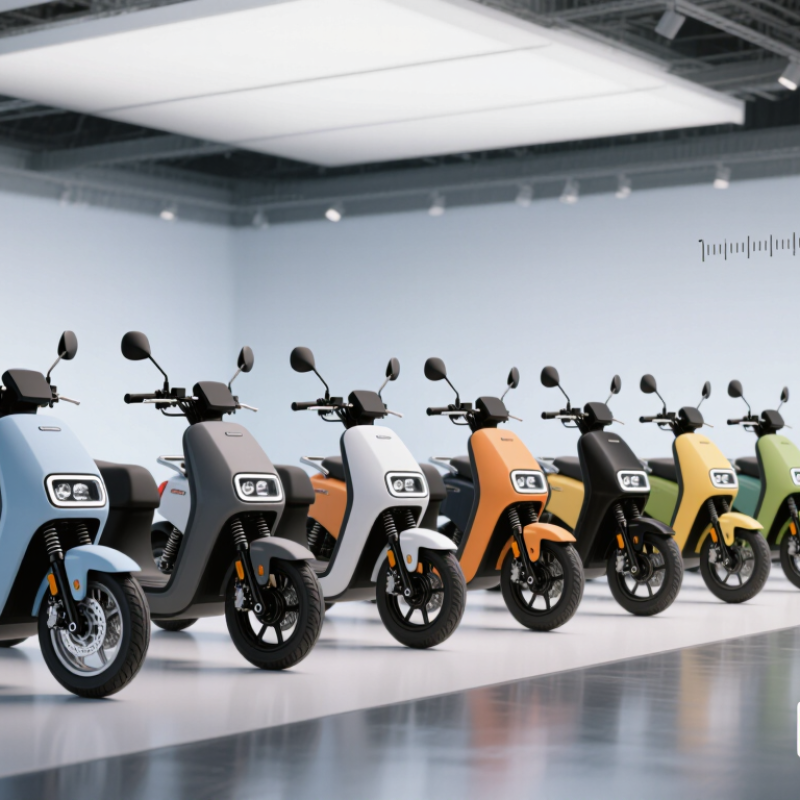
Germany is becoming a serious market for compact electric mobility. This article examines China’s top 10 L6e quadricycles seeking WVTA recognition for German roads. The phrase L6e Quadricycle Wvta Certified Germany describes more than a marketing advantage. It points to European Whole Vehicle Type Approval, documented technical compliance, and a smoother registration pathway across member states.

The comparison considers range, battery safety, charging design, braking performance, dimensions, equipment, and after-sales support. A small vehicle still faces demanding checks. Its headlights must illuminate correctly. Its doors must close securely. Its battery enclosure must withstand practical risks. Importers must also verify certificates, production consistency, conformity documents, and German-language customer information. Missing paperwork can delay a launch, even when the vehicle looks impressive at a trade fair.

Dr. Martin Koers, a German automotive compliance specialist, offers a useful warning: “Type approval is not a showroom sticker; it is evidence that the vehicle remains compliant in real production.” That view matters for Chinese manufacturers entering Germany. A prototype may pass inspection, while later batches reveal different software, tires, or battery suppliers. This is where confidence can weaken. The ranking therefore should not rely only on price or advertised range. It should examine traceable evidence, independent testing, warranty clarity, and importer responsibility. Some specifications may remain difficult to verify publicly. That limitation deserves attention, not concealment. The following overview presents the strongest candidates while recognizing that certification status can change as authorities review documents and production updates.
China Top 10 L6e Quadricycles WVTA Certified for Germany?

L6e Quadricycles: Definition, Classification, and German Market Scope

China Top 10 L6e Quadricycles WVTA Certified for Germany?

L6e quadricycles are light four-wheeled vehicles under European vehicle classification rules. Their maximum design speed is 45 km/h. Their continuous rated power cannot exceed 6 kW. For electric models, the 425 kg mass limit excludes the battery. Seating is normally limited to two occupants. These details shape the vehicle’s practical role in Germany.

The L6e category includes light on-road quadricycles and light quadrimobiles. Enclosed L6e-B vehicles may suit short urban journeys, while simpler versions can support local transport and small delivery work. The German market values compact dimensions, reliable braking, clear lighting, winter readiness, and accessible charging. WVTA, or Whole Vehicle Type-Approval, can simplify registration across the European Union. However, approval documents must match the exact vehicle configuration. A change in battery, power system, or body structure may affect compliance.

Tips: Check the WVTA certificate, CoC, mass data, speed limit, and power rating before purchase. Confirm German insurance and registration requirements with an authorised office. Do not rely only on sales descriptions. Classification can be surprisingly confusing. A vehicle that looks like a small car may still have limited speed, range, and weather protection. Buyers should test door sealing, heating, mirrors, and charging access during colder conditions. These practical checks are often overlooked, including by experienced importers.

WVTA Certification Requirements for L6e Quadricycles in Germany

For a light quadricycle to enter Germany, WVTA certification is more than a laboratory test. L6e vehicles generally have a design speed of up to 45 km/h and must meet European category limits. Approval is granted under the EU type-approval framework, with Germany’s authority and designated technical services reviewing the evidence.

The technical file should identify the vehicle type, variants, dimensions, mass, powertrain, braking system, lighting, mirrors, tyres, seats, safety belts, and electromagnetic compatibility. Electric models also require careful battery and electrical safety documentation. Test reports must match the exact configuration submitted. A small change in motor output or tyre size can affect approval.

The manufacturer must provide a compliant Certificate of Conformity for each vehicle. German registration usually depends on that document, valid insurance, vehicle identification, and correctly prepared national paperwork. Documents should be consistent in German or supplied with suitable translations. This sounds straightforward.

In practice, missing revision records can delay the process. A spreadsheet may look complete while one test report covers an older prototype. I would check every component number against the final production vehicle. The approval route should also confirm whether the vehicle is a basic L6e model or a more specific subcategory, because requirements may differ. Local registration offices can still request clarification, so early communication is sensible.

China’s Top 10 L6e Quadricycle Manufacturers and Vehicle Models

China’s top ten L6e quadricycle manufacturers should be assessed by complete vehicle evidence, not factory size alone. A credible shortlist covers ten manufacturer-model entries with a 45 km/h speed limit, electric power up to 6 kW, and a maximum mass of 425 kg, excluding batteries, under EU Regulation 168/2013. The strongest models usually include enclosed two-seat commuters, compact cargo variants, and weather-protected urban vehicles. Useful details include battery capacity, real winter range, charging time, turning radius, and corrosion protection.

Germany demands more than attractive specifications. A model needs valid EU whole vehicle type-approval documentation, conformity records, VIN traceability, and reliable after-sales support. The European Commission’s type-approval framework makes WVTA a technical compliance process, not a marketing label. The IEA’s Global EV Outlook 2024 reported almost 14 million electric car sales worldwide in 2023, showing strong electrification momentum, but L6e data remains less transparent. That matters.

Evidence is uneven.

A practical ranking should therefore favor tested braking performance, battery safety documentation, spare-parts availability, and dealer training. TÜV-style independent inspection can expose gaps in lighting, restraint systems, or software records. Some advertised ranges may reflect mild laboratory conditions, not German winter traffic. This is where many rankings become unreliable. The best Chinese L6e models for Germany are not necessarily the fastest sellers; they are the entries with traceable approval files, stable production quality, and honest operating data.

Key Specifications, Safety Features, and Compliance Comparison

China Top 10 L6e Quadricycles WVTA Certified for Germany?

A reliable comparison should begin with the approval file, not exterior styling. For each of the ten vehicles, check the WVTA number, variant details, production address, and conformity documents. The L6e classification normally limits speed to 45 km/h, but power, mass, seating, and battery rules depend on the exact subcategory. Never rely on a sales listing alone. German registration offices may request matching certificates, identification numbers, and translated technical records.

Key specifications deserve a practical inspection. Compare real battery capacity, charging time, usable range in cold weather, turning radius, ground clearance, and payload. A small cabin may suit city streets, yet become uncomfortable during winter commuting. Safety equipment should include approved seat belts, effective braking, compliant lamps, mirrors, glazing, tires, and clear warning labels. Electric versions also need careful review of battery protection, insulation, charging safety, and electromagnetic compatibility.

Look for consistent test evidence. WVTA supports regulatory conformity, but it does not guarantee excellent durability or crash protection in every situation. That distinction matters. A weak point in many comparisons is the lack of long-term field data. Range figures may come from controlled testing, not German rain, hills, or heavy heating use. Buyers should verify after-sales support, spare-part access, software updates, and warranty terms. A neat specification sheet can still hide practical gaps.

China Top 10 L6e Quadricycles WVTA Certified for Germany? – Key Specifications, Safety Features, and Compliance Comparison

Brand-neutral comparison of the principal technical and regulatory checkpoints for China-sourced L6e quadricycles intended for German registration.

No. Specification / Compliance Dimension Typical L6e Requirement or Target Relevant Safety or Approval Evidence Germany / WVTA Compliance Consideration Verification Point for Buyers and Importers
1 Vehicle Category L6e Light quadricycle under EU vehicle-category legislation. Four wheels, limited speed and power, and vehicle dimensions within the L6e classification limits. Correct classification is essential because L6e approval requirements differ from passenger-car category M1 requirements. Check the EU type-approval number, vehicle category shown on the CoC, and consistency between the approved type and the delivered vehicle.
2 Maximum Design Speed Not more than 45 km/h for L6e vehicles. Electronic speed limitation and control-system documentation should prevent operation above the approved maximum design speed. A vehicle exceeding the approved limit may fall outside L6e classification and may require approval in another category. Compare the type-approval documentation, software configuration, instrument display, and test results.
3 Maximum Continuous Rated Power L6e-A generally up to 4 kW; L6e-B generally up to 6 kW, subject to the applicable propulsion and approval definitions. Motor rating, controller calibration, and power-limitation evidence should match the approved configuration. Peak motor output should not be used to replace the legally relevant rated-power value in the type-approval file. Request the motor data sheet, controller specification, approval test report, and software version record.
4 Unladen Mass Maximum permitted mass is generally 425 kg, excluding the mass of traction batteries for electric vehicles, subject to the exact regulatory definition. Mass distribution, axle loads, braking performance, and tyre load capacity must be assessed at approved loading conditions. Excessive vehicle mass can invalidate the L6e classification and affect German registration data. Verify the approved mass certificate, axle-load data, battery-exclusion calculation, and production-weight tolerances.
5 Vehicle Dimensions L6e dimensional limits include a maximum overall width of approximately 1.50 m and a maximum overall length of approximately 3.00 m. Mirrors, lighting, body panels, doors, and optional equipment must be included as required by the applicable measurement rules. Dimensions shown in the CoC must correspond to the actual production vehicle and its approved equipment package. Measure a production unit and compare it with the approved dimensional drawings and CoC entries.
6 Occupant Capacity L6e-B passenger quadricycles generally provide a maximum of two seating positions including the driver. Seat anchorage, safety-belt anchorage, belts, seat geometry, and occupant-protection components must match the approved design. Additional seats or unapproved interior conversions can make the vehicle non-compliant for road registration. Confirm the seating capacity on the CoC, seat-belt labels, anchorage documentation, and interior type-approval drawings.
7 Braking System Service and parking braking systems must meet the performance and installation requirements applicable to L-category vehicles. Hydraulic or mechanical service brakes, parking brake retention, brake-circuit integrity, and brake-test results. Braking approval is part of the vehicle type-approval package; aftermarket wheel or tyre changes may affect compliance. Review brake-test reports, brake component specifications, warning indicators, and the production inspection plan.
8 Lighting, Signalling and Visibility Approved headlamps, position lamps, direction indicators, rear lamps, stop lamps, reflectors, and rear registration-plate illumination. Lighting components should carry the required approval markings and be installed at the approved height, spacing, and orientation. German registration can be delayed if lamps lack acceptable approval markings or if the installed configuration differs from the approved type. Check lamp approval marks, photometric documentation, wiring, dashboard tell-tales, and the exact equipment list.
9 Electrical, EMC and Battery Safety Electric versions should use an approved high-voltage architecture, insulated traction system, suitable battery protection, and electromagnetic-compatibility controls. Battery over-current protection, insulation monitoring where applicable, service disconnect, thermal management, charging protection, and EMC test evidence. Battery transport documentation and vehicle type approval are separate matters; both may be needed during import and distribution. Request the battery approval documentation, UN 38.3 transport test summary, EMC reports, charger specifications, and emergency service information.
10 WVTA, CoC and German Registration Whole Vehicle Type-Approval should be supported by a valid EU type-approval number and a Certificate of Conformity for each vehicle. Approval documentation should cover the exact variant, version, propulsion system, mass, dimensions, tyres, lights, braking system, and software configuration. WVTA is an EU approval route and is not automatically proven by a supplier declaration alone. Germany also requires registration, insurance, and vehicle documents accepted by the registration authority. Validate the approval number, CoC authenticity, VIN consistency, production conformity, German registration requirements, and any applicable import or customs documents.
Regulatory reference basis: EU vehicle-category and type-approval requirements under Regulation (EU) No 168/2013 and its related delegated and implementing acts. Exact requirements depend on the L6e subcategory, propulsion type, technical variant, production date, and approved equipment.

Importation, Registration, and Purchase Considerations in Germany

Importing an L6e quadricycle from China into Germany requires more than checking a low purchase price. WVTA certification can simplify approval, but the vehicle must match the approved type exactly. Confirm the Certificate of Conformity, chassis number, technical data, and production configuration before payment. A document mismatch can delay registration.

German buyers should budget for transport, customs procedures, import VAT, insurance, and registration fees. Customs classification may affect the final cost. Keep the commercial invoice, freight documents, customs evidence, and CoC together. The local registration office may also request identification and an electronic insurance confirmation. Ask the seller which party handles customs clearance. Do not assume it is included.

Purchase decisions should include battery warranty, charging compatibility, spare parts, repair support, and German-language instructions. Check whether replacement batteries can be shipped safely and serviced locally. A 45 km/h vehicle may suit short urban trips, but hills, winter temperatures, and limited cabin space change daily usability. Test access, visibility, braking feel, and charging time where possible. Online photographs are not enough. I would also verify the EU importer’s contact details and written warranty terms, because vague promises become difficult after delivery. The process can work well, yet small administrative gaps remain surprisingly expensive.