Ultimate Tips for Choosing an EV Charger for Your Car?
Choosing the right Ev Charger Car is crucial for every electric vehicle owner. With various options available, the decision can be overwhelming. This guide simplifies the process.
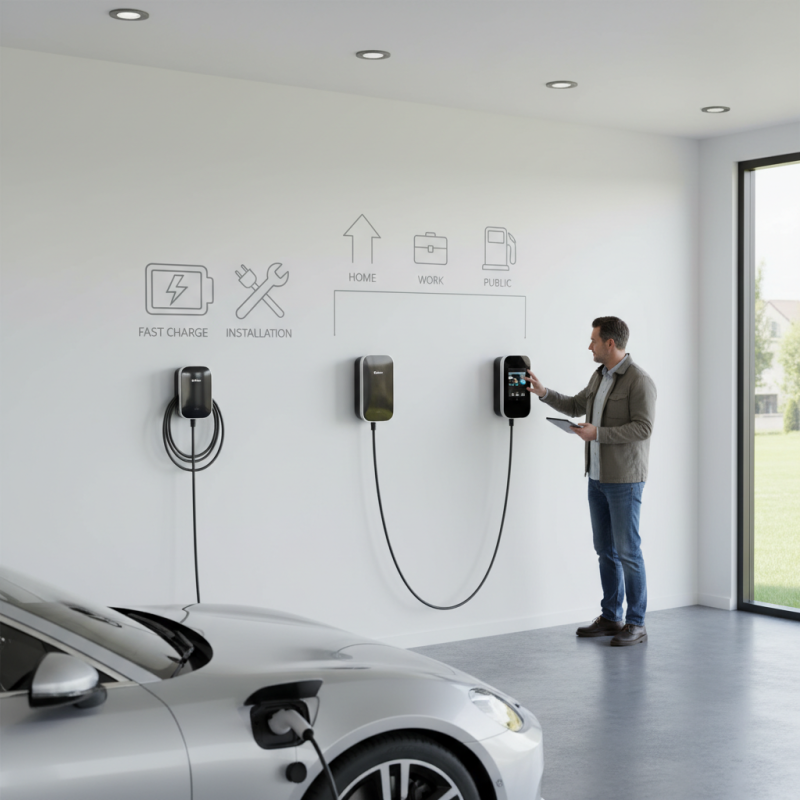
When selecting an EV charger car, consider your driving habits and charging needs. Think about where you will charge most often — at home, work, or public stations. The speed of charging can differ significantly between chargers. Fast chargers save time, but may cost more.
Also, reflect on the installation process. Some chargers require professional installation, while others can be set up easily. Look at the available space too; not all homes have the same setup. Assessing your situation helps in choosing the most suitable option. Your decision should be practical, balancing cost and convenience.
Understanding Different Types of EV Chargers: Level 1, Level 2, and DC Fast Charging
Choosing the right EV charger is crucial for electric vehicle (EV) owners. Understanding the types of chargers available can help you make informed decisions. There are three primary types: Level 1, Level 2, and DC Fast Charging.
Level 1 chargers use a standard 120-volt outlet. They are often found at home. The charging process is slow, taking up to 24 hours for a full charge in some models. While this method is convenient, it may not meet the needs of every user, especially those with longer commutes. Research shows that about 80% of EV owners have access to Level 1 charging at home, but many still desire quicker options.
Level 2 chargers offer a faster alternative. Operating at 240 volts, they can charge a vehicle in 4 to 8 hours. This type is widely used in public charging stations. However, installation at home can be costly, and many users are unsure about the benefits. DC Fast Charging is the quickest method, providing 80% charge in about 30 minutes. Yet, these stations are not as widespread and can be limited in certain areas. This presents a challenge for travel and planning. EV owners must weigh the convenience of charging speed against their budget and accessibility.
Evaluating Charging Speed: How kW Rating Impacts EV Charging Time
When considering an EV charger, charging speed is crucial. The kW rating directly influences how quickly your vehicle can be charged. A higher kW rating means a faster charge, but many factors come into play. For instance, the car's battery capacity matters. Not all cars can accept high charging rates. Therefore, a charger with a high kW rating may not fully utilize its potential for every vehicle.
Charging time varies widely. For instance, a charger rated at 7 kW can take several hours for a full charge on a standard EV. In contrast, a 22 kW charger might cut that time in half. However, practical limitations exist. Your home’s electrical system may not support high kW ratings, leading to potential upgrades. Weigh the costs and benefits of faster options.
Think about your daily routine, too. Overnight charging at lower speeds might suffice for some drivers. In contrast, others may need a fast top-up during the day. Understand your driving habits and choose accordingly. Evaluate where and how frequently you'll charge. This can help you avoid overpaying for speed you don't use.
Assessing Installation Requirements: Home vs. Public Charging Stations
When assessing installation requirements for EV chargers, consider the differences between home and public charging stations. Home installations may offer convenience, but they need planning. For example, check your electrical capacity and the location of your parking space. Wall outlets might be too far from where you park. That can delay charging times. Sometimes, upgrades to your electrical panel are necessary, which can be costly.
Public charging stations provide flexibility but come with their own challenges. Finding a nearby station is a priority, especially during long trips. Not all public stations are created equal. Some are fast chargers, while others take longer. Always verify their availability before you leave. It can be frustrating to arrive at a station only to find it's out of service or occupied. Planning ahead can make your experience smoother.
Involving professionals for home installations is vital; DIY can lead to mistakes. Electrical codes must be followed. A faulty installation can cause safety hazards. Public chargers may seem straightforward, but they have varying compatibility with different car models. This can lead to unexpected issues at the charging station. Reflect on your needs to find the best solution for your EV charging.
Analyzing Cost Factors: Initial Investment, Installation, and Long-term Savings
When choosing an EV charger, cost factors play a significant role. The initial investment can vary widely. Some chargers are more affordable upfront; however, they might lack essential features. It's crucial to balance the cost with future needs. Installation can also add to the overall budget. Hiring a professional may be necessary. Installing a charger in a garage is easier than outside. But outdoor installations can incur additional costs.
Long-term savings are another vital aspect. Many EV owners save significantly on fuel. A reliable charger can enhance that savings over time. Reduced electricity rates during off-peak hours can lower bills. Yet, some chargers are more energy-efficient than others. An inefficient charger can lead to higher costs down the line. Evaluating energy consumption is necessary for long-term planning.
Investing in a quality charger may seem daunting. But, it can pay off in dividends later. Consider the potential for added convenience and ease of use. Cheaper options may cause frustration. Reflect on what features are most valuable. Think about your driving habits and how often you charge. Making an informed decision requires careful analysis and consideration.
Considering Smart Charger Features: Connectivity, Scheduling, and Energy Management
When choosing an EV charger, smart features play a crucial role. Connectivity options are essential. Look for chargers that connect to your home Wi-Fi. This allows for remote monitoring through an app. You can check charging status instantly. You can also receive alerts about your charging sessions. It makes the experience much more convenient.
Scheduling is another important feature. A good charger allows you to set charging times. This can help you take advantage of lower energy rates during off-peak hours. Imagine charging overnight when electricity is cheaper. It not only saves money but also reduces grid demand. However, not all chargers have effective scheduling options. It’s important to research and compare.
Energy management features help optimize your home’s energy use. Some chargers can communicate with your home energy system. They adjust charging based on your home’s energy consumption. You might find this feature useful during peak demand. However, some chargers may struggle with this integration. It’s worth testing to see if it meets your needs. After all, energy efficiency benefits everyone.
EV Charger Features Comparison
This bar chart represents the importance level of various features when choosing an EV charger for your car. Connectivity, Scheduling, and Energy Management are the most prioritized features, while Compact Design and User Interface are considered important but slightly less critical.