How to Choose the Right Vehicle Power Inverter for Your Needs?
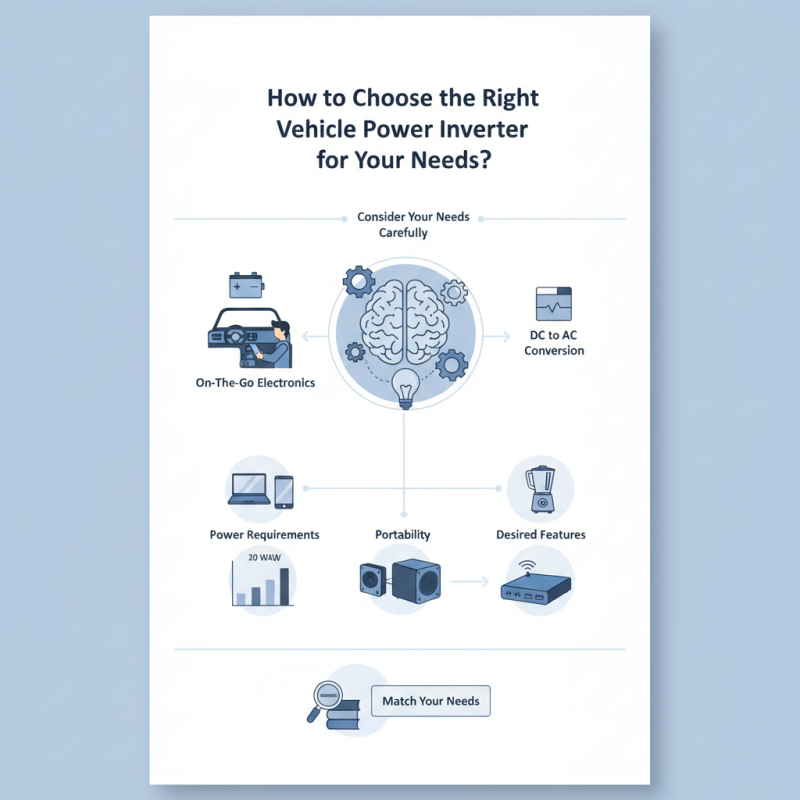
When choosing the right vehicle power inverter, clarity is key. A vehicle power inverter converts DC to AC power. This can be vital for charging devices on the go. Many of us rely on electronics while traveling. Having a reliable power source can enhance the journey.
Consider your needs carefully. The right inverter should match your power requirements. Think about what devices you will use. Different inverters have varying outputs. Some may not handle high-wattage devices well. This can lead to disappointment. It's also essential to consider portability. A compact inverter might serve better in tight spaces.
Keep in mind the features you desire. Some inverters offer USB ports. Others provide multiple AC outlets. The choices can feel overwhelming. Research is crucial. Not all inverters are created equal. Reflect on what will work best for your specific situation.
Understanding Vehicle Power Inverters and Their Uses
When considering a vehicle power inverter, understanding its uses is critical. A power inverter converts DC (direct current) from your vehicle’s battery to AC (alternating current), which is suitable for powering household devices. According to industry reports, around 50% of roadside emergencies stem from dead batteries. Having a reliable inverter can aid in keeping essential devices running in unexpected situations.
Tips: Determine your device’s power requirements before selecting an inverter. This ensures you choose a unit that meets your needs without risking overload. Many devices, especially larger ones, draw more power at startup than during normal operation. For instance, microwaves may require twice their operating wattage for a brief moment. Always account for this when calculating total wattage.
An inverter’s efficiency impacts battery life too. Most inverters range between 80% to 90% efficiency. Lower efficiency means your battery will drain faster. If you're out for extended trips, consider how efficient your inverter is. You’ll want one that balances power needs with battery preservation. Keeping track of usage can help you adjust your habits as necessary.
Comparison of Vehicle Power Inverter Types
This bar chart compares the efficiency of different types of vehicle power inverters: Modified Sine Wave, Pure Sine Wave, and Square Wave. Pure Sine Wave inverters are the most efficient for sensitive electronics, while Modified Sine Wave offers a balance of cost and performance.
Evaluating the Power Requirements for Your Devices
When choosing a vehicle power inverter, it’s essential to evaluate the power requirements of your devices. Knowing the total wattage needed is crucial. Most devices have a label that shows their wattage. For example, a laptop may require 50-100 watts, while a small refrigerator might need around 200-600 watts. This is where you start your calculations.
Tips: Always check the peak wattage. Some devices, like refrigerators, need extra power to start. This peak demand may be significantly higher than their running wattage. You want an inverter that can handle these peaks comfortably.
Consider the number of devices you plan to power simultaneously. It’s easy to underestimate this. Think about charging a phone while using a laptop. Add up the wattage for each device. It’s common to overlook some smaller devices. They can add up quickly! Sometimes, even an unexpected need for power can arise during a trip. It's beneficial to have a little extra capacity in your inverter.
Tips: Aim for an inverter with a capacity 20% higher than your total needs. This gives a buffer and helps avoid overloading. If you're unsure, consult the product manuals of your devices. They often contain helpful information about power consumption. Ensuring you have sufficient power can make a significant difference during your travels.
Types of Vehicle Power Inverters: Pros and Cons
When selecting a vehicle power inverter, understanding the types available is crucial. There are mainly three types: modified sine wave inverters, pure sine wave inverters, and standalone inverters. Each has its particular strengths and weaknesses, which may influence your choice.
Modified sine wave inverters are the most budget-friendly. They effectively power simple devices like phone chargers and small appliances. However, they can create noise and may not work well with sensitive electronics. Approximately 70% of users prefer this type for its cost efficiency but often regret performance issues later on.
On the other hand, pure sine wave inverters provide clean, stable power. They are ideal for sensitive equipment. Data shows that devices powered by pure sine wave inverters operate more efficiently. Yet, they come at a much higher price point. This higher investment can be daunting. Moreover, some users find that these inverters consume more battery power than expected.
Finally, standalone inverters offer flexibility for specialized applications. They can serve various needs simultaneously. However, installation can be complex and might require professional assistance. Many users wish for simpler options in this area. Choosing the right inverter demands careful consideration of your specific power requirements and usage scenarios.
Key Features to Look for in a Vehicle Power Inverter
When selecting a vehicle power inverter, consider several key features. Look for wattage capacity first. Many devices require specific wattage to operate effectively. A common inverter offers between 300 to 400 watts, suitable for charging laptops or small appliances. However, if you use more power-hungry devices, like a mini fridge, you might need at least 1000 watts. Industry reports suggest that an inverter's wattage is a critical factor in ensuring smooth operation.
Next, check the inverter type. There are two main types: modified sine wave and pure sine wave. Modified sine wave inverters are often cheaper but may not support all devices. Pure sine wave inverters, while more expensive, provide cleaner power. This can prevent potential damage to sensitive electronics, such as medical devices or audio equipment. Some users report issues when using modified sine wave inverters with such gadgets.
Portability is also essential. A lightweight inverter can be easily moved and stored. Some models include handle designs or compact builds. Look for USB ports for charging mobile devices too. Many users appreciate the convenience of having additional charging options.
Still, don’t forget safety features. Overload protection, short circuit protection, and cooling fans are crucial for avoiding damage and ensuring longevity. A minor oversight here can lead to frustrating issues later.
How to Install and Maintain Your Vehicle Power Inverter
When installing a vehicle power inverter, the first step is ensuring your vehicle's electrical system can support it. Studies indicate that nearly 30% of vehicle power issues stem from improper installation. Understanding your vehicle's battery capacity is crucial. Inverters generally require a direct connection to the battery. A dedicated installation minimizes risks and maximizes performance.
Maintenance of your inverter is equally essential. Regularly check connections for corrosion or looseness. Dust and debris can impede performance, so clean the unit periodically. Interestingly, reports reveal that more than 20% of inverters fail due to neglect. Monitoring the inverter’s temperature helps in preventing overheating. Ensure proper ventilation during use, particularly on hot days.
Pay attention to warning signs. If the inverter makes unusual noises or provides inconsistent power, it may be time to troubleshoot. Reflections on user experiences suggest that careful monitoring can extend an inverter's lifespan significantly. Adopting a proactive approach in installation and maintenance not only enhances safety but also improves overall efficiency.
How to Choose the Right Vehicle Power Inverter for Your Needs? - How to Install and Maintain Your Vehicle Power Inverter
| Feature | Description | Importance | Maintenance Tips |
| Power Rating | Measure of how much power the inverter can provide, usually in watts. | Critical for determining what devices can be powered. | Regularly check if the inverter can handle the total load of devices. |
| Output Type | Inverters can provide pure sine wave or modified sine wave output. | Pure sine wave is better for sensitive electronics. | Ensure devices are compatible with the output type of the inverter. |
| Portability | Size and weight can affect how easy it is to move and store. | Important for travel and outdoor activities. | Store in a safe place to prevent damage during transport. |
| Safety Features | Includes protections like overload, short-circuit, and over-temperature. | Crucial for preventing damage to devices and the inverter. | Regularly inspect safety features to ensure they function properly. |
| Installation | The method used to connect the inverter to the vehicle’s electrical system. | A proper installation ensures efficiency and safety. | Follow the manufacturer’s instructions carefully during setup. |