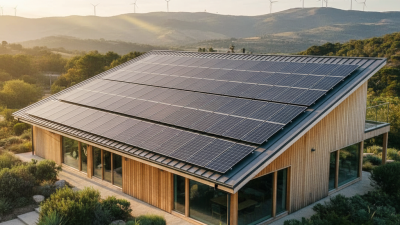
How to Choose the Right Solar Panel System for Your Home?
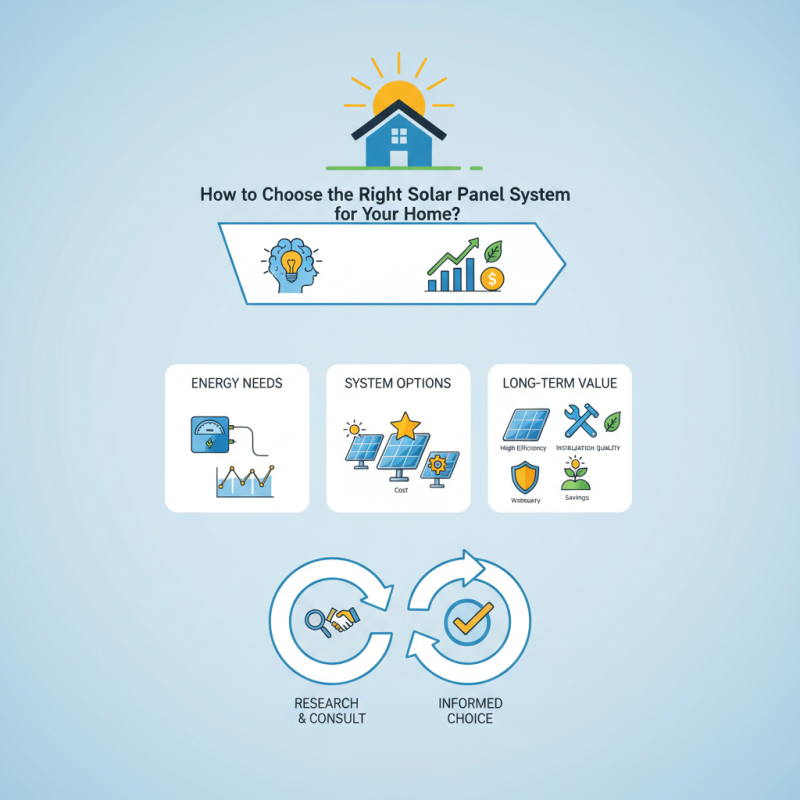
Choosing the right solar panel system for your home can seem daunting. However, industry expert Dr. Emily Carter emphasizes, "Understanding your energy needs is crucial." This insight is vital as homeowners evaluate their options. A suitable solar panel system not only cuts monthly bills but also supports environmental sustainability.
Homeowners must consider their energy consumption and local solar incentives. Many systems have different features, efficiency ratings, and costs. An ill-suited system might lead to future frustrations or financial strain. Dr. Carter advises conducting thorough research and consulting with professionals to find a fitting solution.
It's common to overlook factors like installation quality and warranty. Cutting corners can lead to inefficiencies down the line. A reliable solar panel system requires upfront investments, but the long-term savings are significant. By prioritizing informed choices, homeowners can maximize their investment in renewable energy.
Understanding Your Energy Needs: Assessing Home Consumption Data
Assessing your home's energy consumption is critical when choosing a solar panel system. Start by collecting data on your electricity bills for the past year. Look for patterns in your monthly usage. This data reveals your typical energy needs and helps forecast future requirements. Understanding your peak usage times can guide you in selecting the right system size and battery options.
Consider factors like seasonal changes and family habits. Do you have energy-intensive appliances? Assess their impact on your overall usage. You might discover that summer months yield higher consumption due to air conditioning. Don't forget to factor in occasional lifestyle changes, such as working from home. This reflection can uncover hidden energy demands, ensuring your solar system meets your needs effectively.
Evaluating your energy data may reveal underutilized appliances or outdated technologies. This is an opportunity for improvement. You might consider energy-efficient devices to reduce overall consumption. Embrace the process of trial and error. A detailed understanding of your energy habits will lead to a more informed decision regarding your solar panel investment.
Evaluating Solar Panel Types: Monocrystalline vs. Polycrystalline Options
When considering a solar panel system, choosing between monocrystalline and polycrystalline panels is crucial. Monocrystalline panels are made from a single crystal structure, which allows them to be more efficient. They typically convert more sunlight into energy, making them a great choice for smaller rooftops. Their sleek appearance often appeals to homeowners. However, they usually come with a higher price tag.
Polycrystalline panels consist of multiple crystal structures. This makes them less efficient than monocrystalline options, but they are more affordable to produce. They perform well in large installations where space isn't limited, yet they can lose performance in high temperatures. Homeowners should evaluate their specific needs and installation area before deciding. It's essential to weigh the long-term savings against initial costs.
Reflecting on your energy goals can guide your choice effectively.
Calculating System Size: Key Metrics for Peak Power Requirements
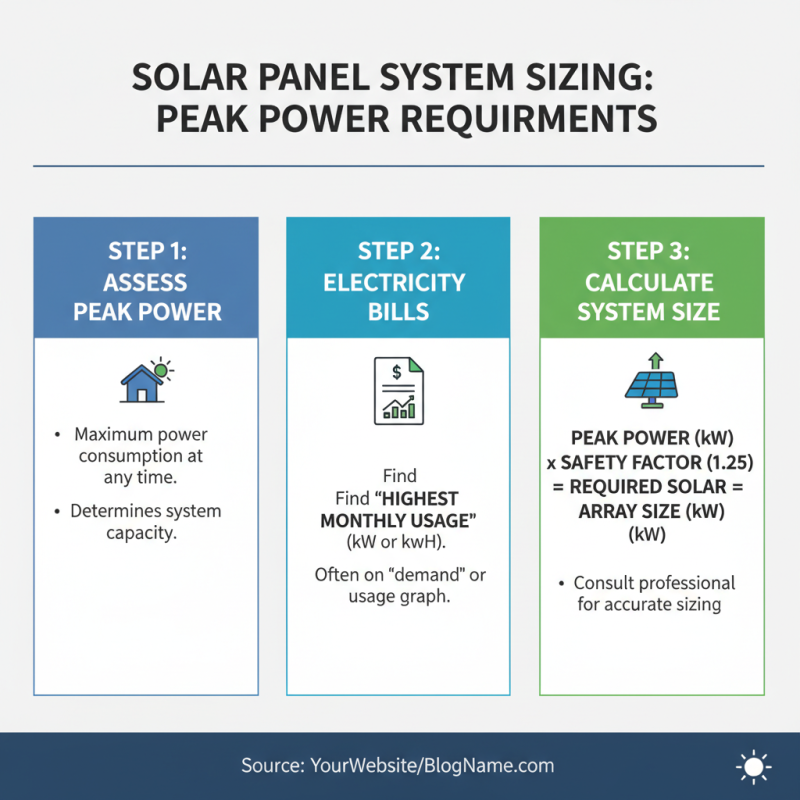
Calculating the size of your solar panel system is crucial. Start by assessing your peak power requirements. This figure tells you the maximum power your household consumes at any given time. You can determine this by reviewing past electricity bills. Look at your highest monthly usage.
Next, consider your roof space. Not all roofs can support the same number of panels. Measure usable areas, ensuring no obstructions like chimneys or trees block sunlight. An accurate measurement can prevent future complications. Sometimes, homeowners underestimate the impact of shading on output.
Lastly, account for local weather patterns. If you live in a cloudy area, your calculations must adjust. Use tools or consult professionals to get regional insights. A poorly sized system may lead to higher energy costs. Regularly revisit and update your metrics. It’s an ongoing process that requires attention. Establishing a reliable solar power system is not just a one-time effort; it needs reflection and revision.
Considering Local Climate: How Solar Insolation Affects Performance
When selecting a solar panel system, understanding local climate is crucial. Solar insolation is a measure of solar radiation energy received on a given surface area and time. It significantly impacts the efficiency of solar panels. For instance, regions with high solar insolation, like Arizona, can produce over 6 kWh/m²/day. This maximizes energy generation potential.
In contrast, areas with low solar insolation, such as the Pacific Northwest, may only receive around 3-4 kWh/m²/day. This disparity means homeowners in less sunny regions might need more panels to meet their energy needs. According to the National Renewable Energy Laboratory, even slight adjustments to solar panel angle can improve performance by 15-20% in varying climates.
Such details highlight the importance of local weather patterns. A well-informed decision may require consulting regional climate data. This ensures the solar panel system you choose aligns with your home’s specific conditions. Climate variability can also influence panel degradation, leading to differing lifespans and effectiveness. Understanding your environment is vital for maximizing returns on solar investments.
How to Choose the Right Solar Panel System for Your Home? - Considering Local Climate: How Solar Insolation Affects Performance
| Location |
Average Solar Insolation (kWh/m²/day) |
Recommended Panel Type |
Estimated Performance Ratio (%) |
Cost per Watt (USD) |
| Phoenix, AZ |
6.0 |
Monocrystalline |
80 |
2.60 |
| New York, NY |
4.0 |
Polycrystalline |
75 |
3.00 |
| Miami, FL |
5.5 |
Thin-film |
70 |
2.80 |
| Seattle, WA |
3.5 |
Monocrystalline |
65 |
3.50 |
| Denver, CO |
5.2 |
Polycrystalline |
78 |
2.75 |
Analyzing Financial Incentives: Tax Credits and Rebates for Solar Installation
When considering a solar panel system, financial incentives play a crucial role. Tax credits and rebates can significantly reduce installation costs. In many regions, homeowners may qualify for a federal tax credit. This credit often covers a substantial percentage of the installation expenses. Understanding the specifics of these incentives is essential. They vary widely based on location and current regulations.
Rebates are another financial resource. Local governments or utility companies often provide them. These incentives might have specific application processes. They may not always be well-publicized, leading to missed opportunities. Homeowners should closely research available options. Analyzing past experiences of others can help in this process. Some may find the system complicated and time-consuming. Thus, consulting a financial advisor can be beneficial.
Be aware of changes in policies. They could affect your savings drastically. Staying informed is critical. While incentives offer financial relief, they require careful consideration. Evaluate your specific situation before proceeding. This can lead to a more informed decision.