How to Choose the Best Off Grid Solar System for Your Home?
Choosing the best off grid solar system for your home is a crucial decision. As the demand for renewable energy grows, off grid solar technology continues to evolve. According to the Solar Energy Industries Association (SEIA), the off grid solar market has expanded by over 20% annually in recent years. This data highlights the increasing interest in energy independence and sustainability.
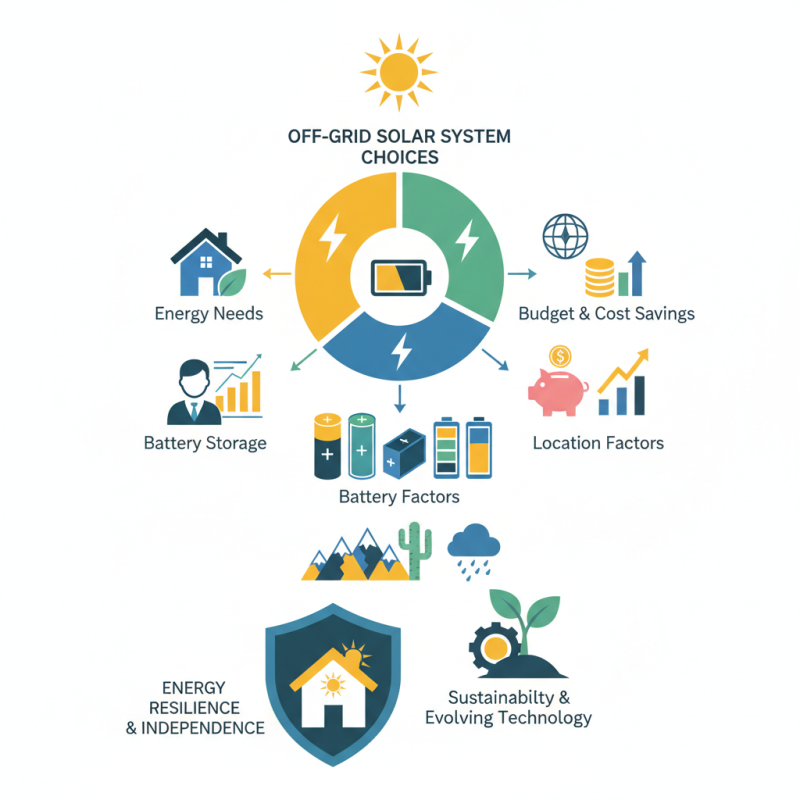
Expert in renewable energy, Dr. Emily Roberts, states, “Selecting the right off grid solar system can significantly impact your energy resilience and cost savings.” Her insights emphasize the importance of understanding your energy needs before making a choice. Off grid solar systems offer unique benefits. However, they also require careful consideration of various factors, including location and budget.
Homeowners assume that all off grid solar solutions are equal. Yet, some systems can underperform, leading to frustration. It’s essential to learn about different technologies, battery storage, and installation options. The right system can provide reliable power but may come with unexpected challenges. Evaluating your specific situation helps in making a more informed decision.
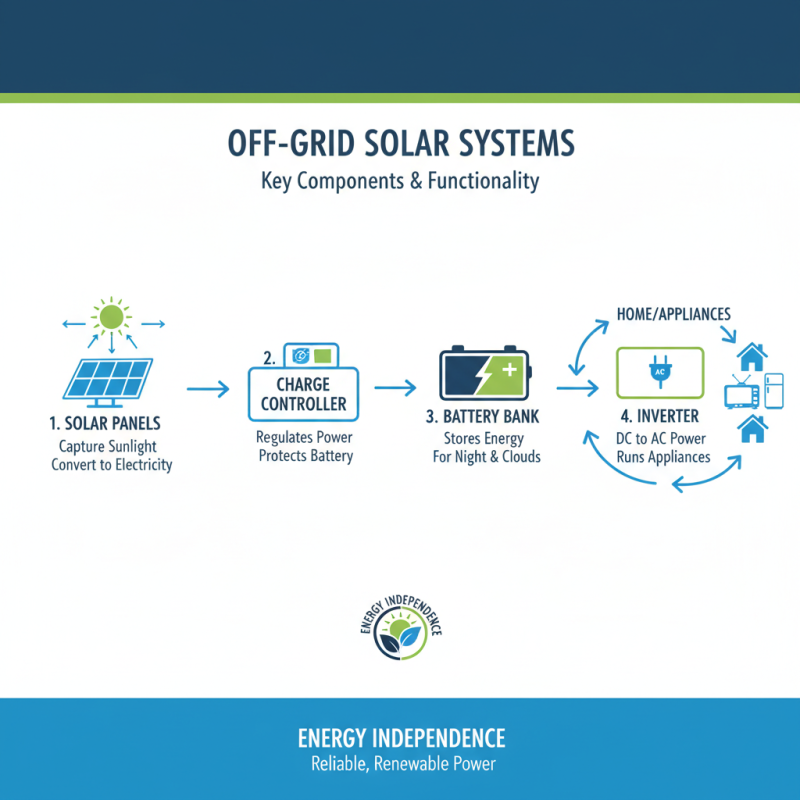
Understanding Off-Grid Solar Systems: Key Components and Functionality
Off-grid solar systems are a viable solution for energy independence. Understanding their key components is essential for making an informed choice. Solar panels, which capture sunlight, are the foundation of any off-grid system. These panels convert solar energy into electricity. The efficiency of panels affects overall performance.
Batteries play a critical role, storing energy for use when the sun isn't shining. Choose batteries based on capacity and lifespan. Inverters are another key component, converting direct current (DC) from the solar panels to alternating current (AC) for household use. This conversion enables compatibility with standard appliances. Poor inverter selection can lead to inefficiencies.
Wiring and charge controllers ensure the system runs smoothly. Charge controllers regulate the power flow, preventing battery overcharging. It's vital to assess your energy needs and location before installation. Consider the potential issues that may arise, like shading from trees or weather variations. A well-planned off-grid system can be rewarding but requires careful consideration and occasional adjustments to optimize performance.
Evaluating Your Energy Needs: Calculating Daily Consumption and Peak Usage
Evaluating your energy needs is a vital first step when choosing an off-grid solar system. Begin by calculating your daily consumption. This means adding up the wattage of all your devices. Appliances like refrigerators and heaters use more energy than light bulbs and electronics. Keep a journal for a week to track usage. You'll discover patterns in your peak times for energy use, often during mornings and evenings.
Consider peak usage periods when planning your solar system. Peak usage refers to the time when energy demand is highest. If you find that you use more energy during specific hours, your system must accommodate that. Think about battery storage as well. Will your batteries charge fully during the day to meet evening needs? Not all systems perform equally, and some may leave you without power when you need it most.
Lastly, don’t overlook the importance of continuous monitoring. Your needs may change over time, requiring adjustments. An effective off-grid system adapts to your lifestyle, not the other way around. Reflecting on initial choices can lead to a more sustainable energy solution.
How to Choose the Best Off Grid Solar System for Your Home? - Evaluating Your Energy Needs
| Appliance |
Wattage (W) |
Daily Usage (Hours) |
Daily Consumption (Wh) |
| LED Light Bulb |
10 |
5 |
50 |
| Refrigerator |
150 |
24 |
3600 |
| Laptop |
50 |
8 |
400 |
| Television |
100 |
4 |
400 |
| Washing Machine |
500 |
1 |
500 |
| Total Daily Consumption |
4750 Wh |
Selecting the Right Solar Panels: Types, Efficiency Ratings, and Warranties
When selecting solar panels for an off-grid solar system, efficiency ratings play a critical role. Most solar panels today offer efficiencies between 15% and 22%. Higher efficiency means more power generation in limited space. According to the National Renewable Energy Laboratory, a 1 kW solar panel system can save about 1,600 kWh annually. This illustrates the importance of choosing panels with higher efficiency ratings.
Understanding panel types is also essential. Monocrystalline panels tend to be more efficient and take up less space compared to polycrystalline panels. However, polycrystalline panels are often more cost-effective. A study from the Solar Energy Industries Association showed that monocrystalline panels can produce 10% more energy over their lifetime. Warranties are another key factor. A typical warranty period is 25 years, but some manufacturers offer 30 years. Reviewing warranty terms can ensure long-term reliability and peace of mind.
Systematic evaluation of these attributes is important. You'll need to consider your location, as solar performance can vary with geography. For instance, areas with less sunlight may not benefit from higher-efficiency panels as much. Balancing cost, efficiency, and warranty length requires careful thought and perhaps even reevaluation of initial priorities.
Battery Storage Solutions: Comparing Lithium-Ion and Lead-Acid Options
When choosing battery storage for your off-grid solar system, consider lithium-ion and lead-acid options. Lithium-ion batteries are lightweight and compact. They have a high energy density, allowing for more power storage in smaller spaces. Furthermore, they offer longer lifespans and faster charging times. However, the initial cost can be higher than lead-acid batteries.
Lead-acid batteries are more traditional and often more affordable upfront. They are heavier and bulkier, taking up more space. These batteries have been used for decades and have a reliable performance track record. However, they typically require more maintenance and have shorter lifespans. They also lose capacity over time, which could lead to unexpected power shortages.
Choosing between these options depends on your specific needs and budget. Think about how often you’ll use your solar power. Reflect on the available space for installation. Understanding these differences is crucial. Each battery type has its pros and cons. This decision will impact the overall efficiency of your off-grid system. Evaluate your requirements carefully.
Budgeting for Your Off-Grid System: Installation Costs and Financial Incentives
When budgeting for your off-grid solar system, understanding installation costs is crucial. The initial investment can vary widely based on your energy needs and the specific system. Generally, costs range from $15,000 to $40,000. This includes solar panels, batteries, inverters, and installation fees. Be prepared for potential additional expenses, such as site preparation and permits.
Financial incentives can significantly ease your costs. Many regions offer tax credits, rebates, or grants for installing solar systems. Research local policies; you may discover available programs that offset your expenses substantially. A federal investment tax credit could provide you with substantial savings, making your system more accessible.
**Tips:** Work with an experienced installer to analyze your energy needs accurately. They can help avoid costly mistakes. Keep track of incentive deadlines in your area, as they often change. Calculate your long-term savings by evaluating your monthly electricity bills against your new system's performance. Remember, the best decisions come from informed reflection on both costs and savings.
Off-Grid Solar System Installation Costs & Financial Incentives
The chart above illustrates the estimated costs associated with installing an off-grid solar system, along with associated financial incentives. The total cost is shown alongside system components, installation labor, and permits and fees. Financial incentives are represented as negative values, showcasing potential savings for homeowners.